Sex After 50: What Changes, and What Gets Better
There is a dominant story about sex after fifty, and it is wrong. It is neither a slow extinction nor a second youth that has to be proved. It is a change of route.
What does not change is the capacity for pleasure — it stays intact, and reported satisfaction often rises. What changes is how you get there: it takes more time, more direct stimulation, and a great deal less spontaneity. People who adapt do very well. People who wait for the body they had at thirty to come back miss what is actually available.
This is an information piece, not medical advice. Several of the subjects here connect sexuality to general health, and the article says when to see someone.
What changes for her
Lubrication
Falling oestrogen thins the mucosa and reduces its moisture. This corrects very well, and it is where effort pays off fastest — a pH-balanced lubricant, or an intimate moisturiser for baseline comfort, as set out in our article on vaginal dryness.
An important point: local hormonal treatments exist, are well tolerated, and radically change comfort for many women. A tube of lubricant should not be the only answer to a situation that persists. That is an appointment to make, not a thing to endure.
Sensitivity and time
The interval between the start of arousal and the body's full response lengthens. That is not lost desire: it is a different tempo. Direct, sustained stimulation becomes more necessary than it was, where context alone sometimes sufficed.
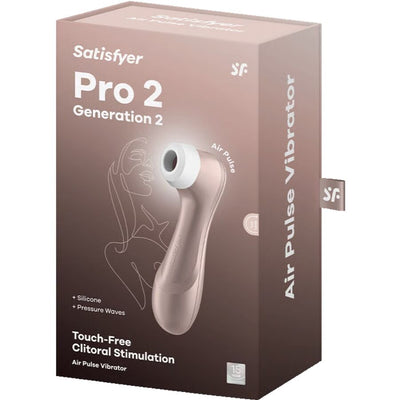
This is exactly the territory of pressure-wave stimulators, whose advantage here is twofold: they produce intense stimulation without direct contact, so without friction on a thinner mucosa, and habituation arrives far later. The Satisfyer Pro 2 (around €57) or the gentler Penguin (around €60) are the two safest entry points. Our stimulator comparison explains the four technologies.
The pelvic floor
Pelvic tone declines with age, which affects support, urinary control and the perceived intensity of orgasmic contractions. Regular training makes sense in this period: fifteen minutes a day, four to eight weeks before you feel a difference. Our guide to kegel balls covers the progression and the contraindications.
What changes for him
Erections become less spontaneous
The most visible change and the worst received, because it is misunderstood. After fifty, an erection responds less to thought and more to direct physical contact. It takes longer to arrive, it is sometimes less firm, and it can fluctuate during sex.
This is not a sign of disinterest, and the worst possible response is to treat it as a failure — performance anxiety turns a normal variation into a lasting difficulty. The useful adjustment is simple: more manual or oral stimulation, and less expectation that it will happen by itself.
Recovery time lengthens
The interval before another erection increases noticeably, and there is nothing abnormal about it. The practical consequence is that it becomes more interesting to move attention away from ejaculation and toward what precedes it — ground our article on making things last covers directly.
What actually helps
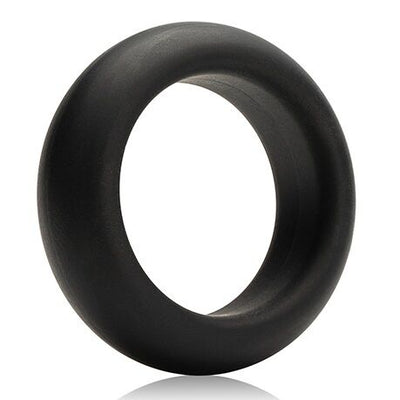
A cock ring slows venous return and aids maintenance: it is mechanical, it works, and it costs eleven euros. The JE JOUE ring in stretchy silicone is the best first purchase; the FUN FACTORY Steady (around €23) adds vibration that benefits both. Twenty minutes maximum, remove immediately if numbness occurs — our cock ring guide has the rules.
When to see a doctor, and why it matters
Regular erectile difficulty is not only a sexual question: it is frequently the first visible sign of a cardiovascular or metabolic problem, sometimes years before anything else appears. That is the best reason to go, and it has nothing to do with performance.
Several treatments exist, along with non-drug devices we cover in our guide to penis pumps — but always after advice, never instead of it.
What gets better
The part the dominant story systematically omits.
Time. The most underestimated change. Children have gone, days are less constrained, and sex stops being relegated to eleven at night after an exhausting day. What was most missing at thirty-five was not desire: it was time.
Performance pressure drops. There is nothing left to prove, no implicit comparison, no fear of judgement. Many people discover a freedom at this age they never had.
Self-knowledge. You know what you like, you can say it, and you can listen. That is probably the decisive advantage, and it cannot be bought.
Contraception ends after menopause — with an important caveat below.
The adjustments that count
Lengthen foreplay, genuinely
Not five minutes more: double. It is the most effective adjustment on this list, it is free, and it answers both the lubrication question and the slower erection. Our articles on types of touch and slow sex give the method.
Move the centre of gravity
When penetration becomes less central — through comfort, fluctuating erections, or simple preference — the repertoire does not shrink, it shifts. Our article on sex without penetration, the most-read in the magazine, is written for exactly this.
Choose objects that are comfortable to hold
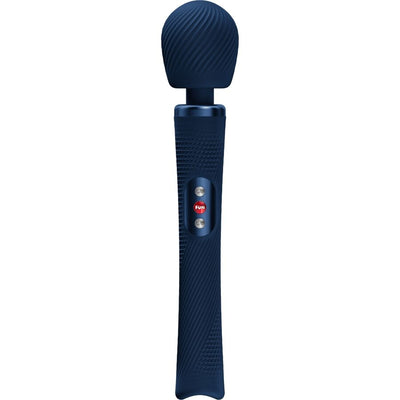
A detail that matters more with age, particularly with arthritis: the FUN FACTORY Vim (around €54) has a long handle, a flexible neck and a grip that does not vibrate — the hand does not go numb over a long session. It is also the most powerful option if sensitivity has decreased.
Mornings rather than evenings
Banal and effective. Testosterone is higher in the morning, and so is energy. Many settled couples gain more from changing the hour than from changing anything else.
Two things not to forget
STIs do not stop at menopause
The end of pregnancy risk often removes the condom — and sexually transmitted infections are rising markedly in this age group, particularly after a separation or bereavement. With a new partner, protection and testing remain exactly as relevant as at twenty-five. Our guide to condoms covers it.
Menopause is not immediate
Contraception remains necessary for a period after the last period. Your doctor will tell you when you can stop — it is not a judgement call to make alone.
Frequently asked questions
Is it normal for desire to drop?
Variation is normal, with many causes — hormonal, medication-related, sleep, mood. A lasting drop that bothers you deserves a consultation rather than resignation. See also our article on falling libido.
Are sex toys ridiculous at this age?
No, and this is probably the age at which they are most useful: they supply exactly what the body now needs more of — direct, sustained, adjustable stimulation. The awkwardness is cultural, not rational.
Should I take hormone therapy?
That is a medical, personal decision depending on your situation. What to take away: local treatments for intimate comfort exist, are distinct from systemic hormone therapy, and are too rarely offered. Ask the question.
My partner has erection difficulties. How should I react?
By not treating it as an incident. Over-reassurance can land as heavily as silence: the most effective response is to carry on differently, without commentary or post-mortem. And to encourage them to see a doctor — for their general health, not their performance.
Can you restart after years without?
Yes, and it is common after a separation or bereavement. Resume gradually, with lubricant and no objective. Tissue readapts, but not in one evening.
In short
What changes after fifty comes down to three things: more time, more contact, less spontaneity. Those are not losses, they are different conditions — and they come with real advantages: available time, nothing to prove, and self-knowledge you did not have at thirty.
Two purchases under seventy euros cover the essentials: a pH-balanced lubricant or moisturiser, and a pressure-wave stimulator or a ring depending on need. The rest is tempo, and it is not for sale.
And if there is one thing to keep: regular erectile difficulty or persistent dryness are reasons to see a doctor in their own right. In both cases effective answers exist, and enduring them in silence serves nobody.