How to prolong pleasure in a relationship: simple and effective methods
Sensual Prestige Guide · Pleasure for Couples & Body Rhythms
How to prolong pleasure in a relationship: simple, effective, and scientifically supported methods
Prolonging pleasure as a couple isn't just about "lasting longer." It's about
above all, learn to slow down, savor, connect , and step out of the logic of
performance. Many couples would like to experience longer, more intimate moments.
intense, but don't always know where to start.
Good news: there are simple, accessible and validated methods.
sexology to prolong sexual relations, reduce pressure and increase
the satisfaction of both partners .
In this article, you will discover:
- how simply slowing down can already change the duration and quality of a
report ;
- concrete breathing techniques and active breaks for better
manage the excitement;
- how communication during the act can strengthen your complicity;
- ideas for positions and rhythms that help prolong the pleasure;
- a comprehensive FAQ and reliable resources to go further.

1. Slow down the pace: the simplest way to prolong the pleasure
Most couples tend to speed up as soon as the pleasure builds. It's instinctive, but if your goal is to prolong the relationship, the winning reflex is… the opposite: to slow down intentionally .
Why does it work?
In men with a penis, rapid and continuous stimulation greatly increases the risk of premature ejaculation. The Cleveland Clinic estimates that premature ejaculation affects 30 to 40% of men, making it a very common reason for seeking medical advice.
Concrete examples to test:
- Switch between fast and slow movements for 20 to 30 seconds.
- Intentionally introduce pauses: stay in contact, but without moving, while breathing deeply.
- Alternate phases of penetration with phases of caressing or kissing.
- Focus on skin-to-skin contact rather than just genital stimulation.
As a couple, you can also clearly say to each other: "We're taking our time, we're not in a hurry." This intention already changes the dynamic.
2. Use breathing to control excitement
Breathing is an extremely effective tool for managing the build-up of arousal . Short, shallow breaths fuel stress and hasten orgasm. Deep, slow breaths, on the other hand, help to maintain a prolonged state of pleasure.
The slow breathing method:
- Inhale through your nose for 4 seconds.
- Let your belly expand (and not just your breasts).
- Exhale through your mouth for 6 to 8 seconds.
- Repeat this cycle several times, without forcing it.
How to integrate it into the report?
- When one of you feels that he/she is "close", they slow down and focus on 3 to 5 deep breaths.
- You can synchronize and breathe together, which also strengthens the emotional connection.
- Between two changes of position, taking a few deep breaths helps to "reset" the intensity.
This approach is also used in sex therapy to combat premature ejaculation, in addition to other behavioral techniques.
3. Communicating during sex: the skill of fulfilled couples
Sexual communication is one of the best predictors of satisfaction. A recent meta-analysis shows that the more open the communication around sex, the higher the sexual and relationship satisfaction .
What you can say (without ruining the mood):
- "That's perfect, keep it up."
- "I want it to last, more slowly."
- "Shall we change our position?"
- "Take a little break, I love it when you come back to it afterwards."
Example scenario:
Do you feel like things are moving too fast? Rather than just putting up with it, you can calmly say: "I love what we're doing, but I'd like us to enjoy it for longer. Shall we slow down a bit?" Generally, the other person will perceive this as a sign of desire, not as criticism.
According to several studies on sexual communication in couples, partners who dare to talk about their desires and limits have significantly higher sexual satisfaction than those who never talk about it. 
4. Vary the positions to adjust the intensity
Some positions are very stimulating and lead quickly to orgasm. Others, more stable and restrained, are perfect for prolonging the encounter. Learning to play with this difference is a real strategy.
Positions that help prolong:
- Lateral position (side by side) : smaller movements, global contact, naturally slower rhythm.
- Sitting opposite each other : allows control of amplitude and speed, while promoting eye contact and kisses.
- Semi-seated positions : ideal for reducing the depth of penetration if it intensifies sensations too quickly.
- Face to face (regardless of the variant): emotional connection helps to get out of autopilot.
You can agree in advance: "When we move laterally, it's because we want to prolong the pleasure." This becomes your personal code.
5. Use "active breaks" instead of stopping completely
Prolonging the experience doesn't mean maintaining the same movement from beginning to end. Active pauses allow the excitement to subside slightly without breaking the connection.
Ideas for active breaks:
- Stop penetration but continue to caress, kiss, and hug each other.
- Focus on other erogenous zones: neck, back, chest, buttocks, stomach…
- Change positions smoothly, while remaining close to each other.
- Playing with looks, breath, words whispered in the ear.
An active break is not a "failure": it is a tool to stay in the pleasure rather than abruptly exiting the moment.
6. Breaking free from the performance mindset: the trap that shortens everything
Telling yourself "I have to last," "I have to live up to expectations," "I have to deliver" is the best way to stress yourself out... and have the opposite effect. The body doesn't like pressure: under tension, it tenses up, and orgasm becomes either too quick or difficult to achieve.
Some helpful mindset changes:
- Replace "I have to hold on" with "I want us to savor this".
- Remember that a moment can be very satisfying even if it is not "perfect".
- Accept that sometimes the duration will be shorter, and other times longer.
- View sexuality as a space for exploration, not an exam to be passed.
This mental relaxation is often what finally allows one to regain control... and naturally prolong the experience.
7. Stimulate the whole body to distribute the excitement
The more the arousal is focused solely on the genitals, the faster orgasm arrives. By involving the whole body more, you distribute the stimulation and prolong the pleasure.
Areas to (re)discover together:
- The nape of the neck, the scalp, the ears.
- The shoulders and upper back.
- The lower back and hips.
- The inner thighs.
- The belly, the waist, the flanks.
Practical example:
Do you feel the penetration is becoming too intense? You can slow down, maintain contact, and spend a few minutes caressing the back, buttocks, or neck. The pleasure doesn't stop: it transforms.
8. Think about pleasure over time, not just in the moment.
Prolonging pleasure also means choosing a sexuality that is part of the long term: less pressure on "this time", more curiosity about what you create together over time.
Post-act rituals to nurture the connection:
- Staying huddled together for a few minutes, without phones, without distractions.
- To tell you what you particularly liked.
- Planning for the next time: "Next time, I'd like us to try...".
- Laughing, talking, massaging each other… instead of separating immediately.
These moments strengthen the bond and reduce the pressure for the next time. Pleasure becomes a dynamic within the couple, not just a one-off event. 
FAQ: How to prolong the pleasure as a couple
Is it normal for everything to go "too fast" sometimes?
Yes, it's very common. Arousal can build up more quickly depending on the level of desire, fatigue, stress, the context, the novelty of the situation… It's not a failure, but rather a signal: your body is reacting. Techniques for slowing down, breathing exercises, and active pauses are designed for this.
How to prolong pleasure without medication?
For many couples, it's possible to prolong pleasure simply through behavioral techniques: slowing down, changing positions, active pauses, deep breathing, whole-body stimulation, and communication. Resources from sites like the Mayo Clinic offer these approaches as top options.
Is it bad to "hold back" an orgasm?
Delaying orgasm for a few moments to prolong pleasure (by slowing down, breathing, or changing stimulation) is generally safe for a healthy person. However, systematically forcing your body to never climax, at the cost of significant tension, can be tiring, frustrating, and counterproductive.
How long should a "normal" sexual encounter last?
There's no "ideal" duration that works for everyone. Some studies estimate the average duration of penetration at just a few minutes, but that doesn't say anything about the overall quality of the experience. What matters is that you're both satisfied and that your own pace is respected.
Why can't I have an orgasm even when intercourse lasts a long time?
Time isn't always enough. For many women, a lack of clitoral stimulation, stress, a relationship too focused on penetration, or limiting beliefs about pleasure can make orgasm difficult. Data suggests that between 10 and 15% of women have never experienced orgasm, and that approximately 50% report difficulty achieving it with a partner. Resources like MedlinePlus and University Hospitals provide helpful explanations of these difficulties and their possible causes.
Does communication really improve sex life?
Yes. Several studies show that couples who talk about their desires, what they like and dislike, have significantly higher sexual and relationship satisfaction . Research on sexual communication in couples also shows that the more openly you express yourself, the easier it is to find a rhythm that works for both of you.
How can I talk about these topics comfortably with my partner?
You can start outside of bed, in a calm setting, with phrases like:
- "I'd like us to talk a little about our sex life, because it's something I care about a lot."
- "Are there things you'd like to try to make it last longer?"
- "Do you feel comfortable giving each other little hints during sex, to better guide each other?"
The idea is not to make a dry assessment, but to open a kind conversation.
Can sex toys help prolong pleasure?
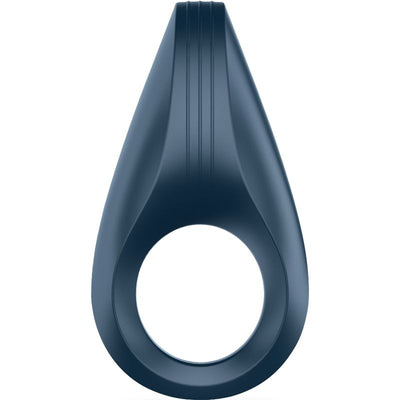
Yes, in some cases. They can help vary the stimulation, shift focus, and play with intensity. For example, using an external sex toy to give pleasure to one partner while the other takes a break can prolong the moment without interrupting it. The important thing is to choose quality products and talk openly about it together.
Can stress prevent one from prolonging pleasure?
Absolutely. Stress, mental strain, anxiety, or personal worries can make the body less receptive, shorten pleasure, or make it less intense. That's why a reassuring environment, longer foreplay, slow breathing, and good communication can make a huge difference.
When is it useful to consult a sexologist or a healthcare professional?
You might consider a consultation if:
- You suffer from very rapid ejaculation repeatedly and it weighs heavily on you;
- You have difficulty enjoying sex because of stress or pain;
- You have never had an orgasm and you would like to be accompanied;
- These difficulties create real suffering in your relationship.
Organizations like AASECT (American Association of Sexuality Educators, Counselors and Therapists) list therapists specifically trained in sexual health.
Useful sources and resources
To delve deeper into the topics of couple sexuality, premature ejaculation, orgasmic difficulties, and intimate communication, here are some reliable and educational resources:
-
Cleveland Clinic – Premature Ejaculation – Explanations of causes, frequency (30–40% of people with a penis affected) and treatment approaches.
https://my.clevelandclinic.org/health/diseases/15627-premature-ejaculation -
Mayo Clinic – Premature ejaculation – Presentation of behavioral, breathing and therapeutic techniques to delay ejaculation.
https://www.mayoclinic.org/diseases-conditions/premature-ejaculation/diagnosis-treatment/drc-20354905 -
MedlinePlus – Orgasmic dysfunction in women – Data on the frequency of orgasmic difficulties and associated factors.
https://medlineplus.gov/ency/article/001953.htm -
University Hospitals – Difficulty Reaching Orgasm: A Common Problem for Women – Educational article on common causes and possible solutions.
https://www.uhhospitals.org/blog/articles/2024/06/difficulty-reaching-orgasm-a-common-problem-for-women -
Psychology Today – Difficulties with Orgasm in Women – Analysis of the psychological, relational and physical reasons explaining the difficulties in reaching orgasm.
https://www.psychologytoday.com/us/blog/experiments/201802/11-reasons-women-may-have-difficulty-with-orgasm -
AASECT – American Association of Sexuality Educators, Counselors and Therapists – Professional organization of reference for finding resources and therapists in sexual health.
https://www.aasect.org
These resources allow you to go further with reliable, nuanced information based on recent scientific data.