Sex Without Penetration: What Actually Works
Here is the number that reframes the whole conversation. In a survey of more than a thousand women, only about 18% reported reaching orgasm from vaginal penetration alone. The large majority needed external stimulation — clitoral, manual, oral — either instead of penetration or alongside it.
That single figure undoes a lot of received wisdom. If penetration were the main event, it would be the main route to orgasm for most people. It isn't. For roughly four women in five, it is the supporting act.
So this article is not about consolation prizes. Outercourse — sex without penetration — is not what you settle for when something has gone wrong. For a great many people it is simply the more effective option, and for some it is the only comfortable one.
Why you might be here
People arrive at this subject from very different places, and the reason matters because it changes what will help.
- Penetration hurts. This deserves proper attention rather than a workaround — see our guide to painful sex and what causes it.
- Erections have become unreliable, through age, medication or illness. Outercourse removes the requirement entirely.
- Pregnancy or infection risk is a concern.
- You are simply bored of a script that goes the same way every time.
- You want more, not less — a fuller range rather than a narrower one.
If pain is the reason, treat the pain. Everything below still applies in the meantime, but it is a companion to a diagnosis, not a substitute for one.
Where the pleasure actually is
Hands
Nothing else offers the same precision over pressure, rhythm and location, and precision is what most bodies respond to.
The single most useful thing you can do is stop guessing. Ask your partner to show you on your hand the pressure and speed they like. Thirty seconds of that is worth years of inference. Then watch breathing rather than waiting for instructions — it tells you more, and faster, than words do.
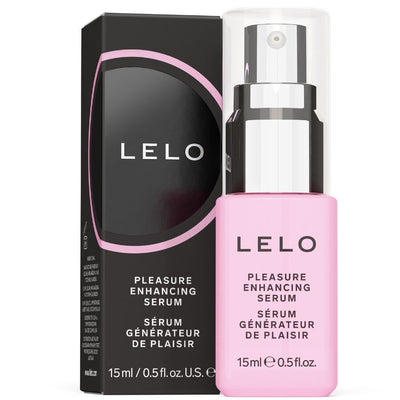
Use lubricant. Friction on dry skin is the most common reason manual stimulation stops feeling good after a few minutes.
Mouths
Oral sex is, for many people, the most reliable route to orgasm there is. Two things improve it more than technique: going slower than feels necessary, and staying consistent once something is working. The most common mistake is changing what you are doing at the exact moment it starts to succeed.
Toys, used externally
Most sex toys are built for external use, and the ones that matter here fall into three groups.
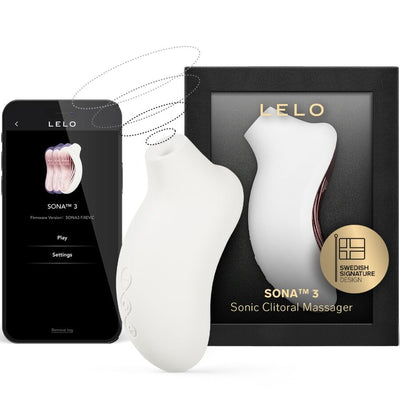
Pressure-wave stimulators produce high intensity without friction or pressure on the tissue, which makes them the right choice when skin is sensitive or sore. Lay-on vibrators are pressed against the body rather than inserted, so you control the intensity entirely with your hand. Vibrating rings sit on a penis and stimulate a partner externally during contact without penetration.
Start low. Almost everyone starts too high, finds it unpleasant, and concludes toys are not for them. Our clitoral stimulators and couples' toys cover the external range.
Skin, everywhere else
The neck, the inner thighs, the lower back, the scalp, the sides of the ribs. These are not consolation zones — they are densely innervated, and they are usually skipped because everyone is in a hurry to get somewhere else.
A massage with no destination is one of the more underrated things two people can do. Warm room, an oil or a massage candle, and an explicit agreement that it is not leading anywhere. Removing the destination is precisely what makes it work.
Together, without touching
Mutual masturbation — each person touching themselves, in company — is one of the most informative things a couple can do, because you both get to see exactly what the other actually does when they are not performing for anyone.
It also removes the pressure to produce a result in someone else, which is often the thing that was in the way.
Making the pause the point
The structural problem with outercourse in a long relationship is that everything gets read as a prelude. Every touch becomes a question about what happens next, and the answer is always assumed.
The fix is unglamorous and it works: decide in advance that penetration is off the table, and say so. Not because anything is wrong, but for one evening. What follows is usually slower, more curious and less scripted, because there is nowhere to arrive.
Couples who do this occasionally report the same thing: the touching gets better, and it stays better afterwards.
What outercourse does and does not protect against
This is where most articles on the subject go quiet, so let us be exact.
Outercourse substantially reduces the risk of pregnancy, and reduces the risk of several sexually transmitted infections compared with unprotected penetration. That is real, and it is one of the reasons sexual health organisations discuss it.
It is not zero risk. Herpes and HPV transmit through skin-to-skin contact. Gonorrhoea and chlamydia transmit through oral sex, and pharyngeal infections are frequently symptomless. Shared toys carry infections between people unless they are covered or properly cleaned.
So the protections still apply: a barrier for oral sex, a condom on any shared toy changed between people, and testing with each new partner. Our guide to STIs, toys and what actually transmits covers the detail.
How to raise it
The fear is always the same on both sides: that this means I am no longer attracted to you, or something is broken.
Frame it as an addition rather than a subtraction. « I want to try something » lands very differently from « I do not want to do that any more », even when the practical result is identical.
Be specific. Vague requests are hard to act on and easy to misread. « I would like a long massage with no expectation attached » gives someone something to do; « I want things to be different » gives them something to worry about.
And if the desires genuinely diverge rather than simply needing translation, our article on mismatched desires around toys and the twenty intimate questions are both built for that conversation.
Frequently asked questions
Is it still sex?
Yes. The definition that excludes it is a cultural convention, not a clinical one, and it happens to exclude most of what actually produces orgasms for most women.
Can you orgasm without penetration?
Very reliably — more reliably than with it, for the majority of women. External stimulation is the primary route, not the backup. The same is true for many men through manual or oral stimulation.
Is outercourse safe sex?
Safer, not safe. It substantially lowers pregnancy risk and reduces some infection risks, but skin-to-skin and oral transmission remain possible. Use barriers and get tested.
My partner treats it as foreplay. What do I do?
Name the pattern rather than the person: « when we do this, it always turns into a lead-up, and I would like it to be the whole thing sometimes ». Agreeing in advance that penetration is off the table for one evening usually settles it faster than any discussion.
Does avoiding penetration mean something is wrong?
Not by itself. It becomes a question worth asking a professional if it is driven by pain, by fear, or by distress — and pain in particular should always be investigated rather than routed around.
Where should someone start?
A long massage with an explicit agreement that it leads nowhere. It costs nothing, it requires no equipment, and it breaks the assumption that touch is a negotiation about what comes next.
In short
Penetration is one option among several, and for most women it is not the most effective one. Treating it as the definition of sex leaves a large amount of pleasure unclaimed and puts a great deal of pressure on the one act least likely to deliver.
Ask to be shown rather than guessing. Use lubricant. Start toys on the lowest setting. Take penetration off the table deliberately now and then, and say that you are doing it.
And keep the safety part in view: less risk is not no risk. Barriers for oral sex, a condom on anything shared, testing with each new partner.
Our clitoral stimulators and couples' toys are built for exactly this kind of pleasure.