Painful Sex: The Causes, and What Actually Helps
Let us open with the sentence a great many people have waited years to hear: pain during sex is not normal, and it is not in your head.
Pain is a symptom. It almost always has an identifiable cause, and that cause almost always has a treatment. Something being common — roughly one woman in five encounters it at some point — does not make it something to accept.
The difficulty is that the subject runs into a double silence: the silence of those affected, who eventually conclude this is simply how they are made, and the silence of appointments too short to do more than suggest relaxing. This article will not diagnose you. It will give you the vocabulary to get one.
First sort: superficial or deep
This is the distinction a clinician will establish, and the only thing worth identifying before you go. It directs almost everything else.
Superficial pain
Located at the entrance, from first contact or initial penetration. Burning, a sensation of tearing or stretching, or the impression of a wall. The causes are local: dryness, tissue thinning, involuntary muscle contraction, inflammation, infection, or a skin condition.
Deep pain
Arising on deeper penetration or in particular positions, often described as a blow or a sharp pull low in the abdomen. This points instead toward the pelvic organs.
| Superficial | Deep | |
|---|---|---|
| Timing | From the entrance | On depth, position-dependent |
| Sensation | Burning, tearing, blocking | Sharp pull, blow, heaviness |
| Common causes | Dryness, vaginismus, vulvodynia, dermatosis, infection | Endometriosis, adenomyosis, fibroids, interstitial cystitis |
| Who to see first | Gynaecologist, midwife, dermatologist | Gynaecologist |
Note whether the pain is constant or situational, recent or lifelong, and whether it exists outside sex. Those three facts are worth a great deal in a consultation.
The usual causes
Dryness and tissue thinning
The most common, and the simplest to treat. It has nothing to do with desire: lubrication depends on a hormonal and vascular balance, not on willingness. You can want someone very much and be dry.
Menopause, the period after childbirth, breastfeeding, the pill, some antidepressants, chemotherapy: the triggers are numerous. Our guide to vaginal dryness covers it in detail.
Vaginismus
An involuntary reflex contraction of the muscles around the vaginal entrance. Involuntary is the operative word: nobody decides to contract, and « just relax » has never resolved anything.
The mechanism sustains itself. A first painful experience creates apprehension, apprehension creates contraction, contraction creates pain. It is a loop — which is precisely why it can be broken.
The outlook is good. Treatment generally combines pelvic floor rehabilitation with a professional, graduated dilators, and psychological support where relevant. Reported success rates are high.
Vulvodynia and vestibulodynia
Vulval pain lasting more than three months with no visible cause on examination. When it concentrates at the entrance and appears only on contact, it is called provoked vestibulodynia.
This is the most frequently missed diagnosis, because the examination looks normal — which regularly leads to patients being redirected toward the psychological. Absence of a visible lesion does not mean absence of pain: this is a sensitisation of nerve endings, and it is treatable.
Endometriosis
It affects roughly one woman in ten of reproductive age, and deep pain during sex is a cardinal sign, alongside severely painful periods.
The average delay before diagnosis remains on the order of seven years. Seven years of women being told that painful periods are simply life. If your pain is deep, cyclical, and worse during your period, say the word « endometriosis » to your doctor. Saying it out loud often speeds things up.
After childbirth
Episiotomy or tear scarring, the hormonal drop of breastfeeding, a disrupted pelvic floor: pain is frequent and frequently unmentioned. It is not inevitable either — a painful scar can be massaged and treated. Our article on intimacy after a baby covers the relational side.
Skin conditions
Lichen sclerosus, eczema, vulval psoriasis: these are dermatological conditions requiring a dermatologist and specific treatment. Lichen sclerosus in particular should be treated without delay, as it can permanently alter the tissue.
The most widespread mistake: strengthening an already tight pelvic floor
This is the point that justifies the article on its own, and it runs against everything you will hear.
The general reflex, faced with a pelvic floor problem, is to strengthen: squeezes, weights, exercises. Yet a large share of penetration pain comes from a hypertonic pelvic floor — too tight, unable to release. Strengthening it makes matters worse.
The opposite is what needs work: release. Diaphragmatic breathing, stretching, sometimes manual work with a physiotherapist or a specialist midwife.
Our guide to kegel balls explains how to strengthen the pelvic floor, and that is appropriate after childbirth or for leakage. It is not what you need if penetration hurts, and introducing an object into a contracted muscle only adds pain. A professional will determine which case you are in; that is an assessment, not a guess.
Men too
Rarely discussed, and men consult even less. The main causes are a tight foreskin, a short frenulum — correctable with a minor procedure — prostatitis, infection, a skin condition, or Peyronie's disease, which curves the penis and makes some positions painful.
All are treatable, and none improves by waiting.
What actually helps
To be read after the consultation, not instead of it. These measures improve comfort; they do not treat endometriosis or lichen sclerosus.
Lubricant, and specifically which
The instinct is right, the choice is often wrong. On sensitive tissue, three ingredients are worth avoiding: glycerin, which encourages thrush in those predisposed, fragrance and flavourings, and « warming » or « cooling » agents, which are deliberate irritants.
Look for a water-based product, fragrance-free, with a pH close to the vagina's — around 4. The SWEDE Original Sensitive at €12.99 is formulated for this. The fruit-flavoured, coloured ranges at €7 are the ones to leave aside here. Our guide to lubricants covers the families.
Intimate moisturiser, which is not the same thing
Lubricant works in the moment. An intimate moisturiser is applied two or three times a week, independently of any sexual activity, and improves the state of the tissue over time. With chronic dryness, that is what changes things — lubricant only compensates.
The LELO Aloe Vera intimate moisturiser at €24.99 belongs to this category. Allow several weeks of regular use before judging.
Take penetration out of the equation
The most effective short-term measure, and the cheapest: temporarily stop doing the thing that hurts. Not out of resignation, but to interrupt the apprehension-contraction-pain loop while the cause is treated.
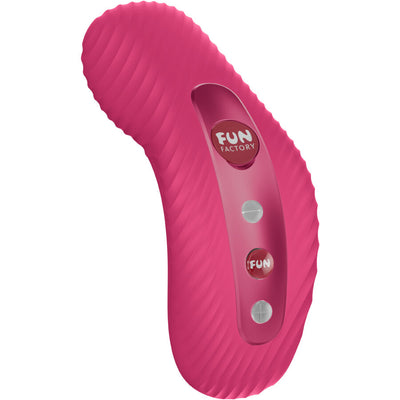
External stimulation alone keeps a sex life going in the meantime, which matters more than people expect for morale and for the relationship. The FUN FACTORY Laya III at €27.99 is a lay-on model, nothing inserted, with pressure entirely controlled by hand.
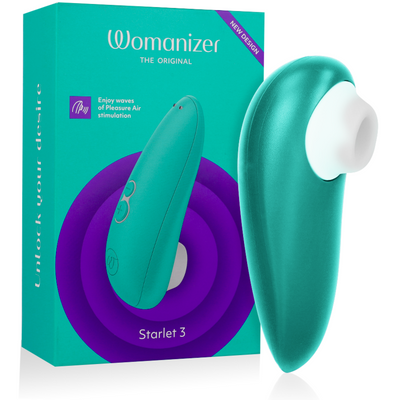
For a vulva that is sore to the touch, pressure-wave stimulators have a specific advantage: they work without friction or firm contact. The Womanizer Starlet 3 at €54.99 is the most accessible example — the technology is compared in our stimulator comparison.
Our guide to sex without penetration covers the rest.
Controlling depth
When the pain is deep, position decides everything. Positions where the receiving partner keeps control of rhythm and depth — on top, or on their side — allow stopping before the painful point rather than enduring it. Removing the unpredictability often does as much as reducing the depth.
What we do not stock
We do not offer graduated vaginal dilator kits. They are the first-line tool for vaginismus, and their absence from our catalogue is a gap rather than an editorial position. In the meantime, your doctor, midwife or a pharmacy will point you to them — and the guidance matters at least as much as the object.
Who to see, and what to say
A gynaecologist or a midwife first. A dermatologist if the skin is involved. A physiotherapist or specialist midwife for pelvic floor rehabilitation.
Four sentences that change a consultation:
- « The pain is at the entrance », or « it is deep ».
- « It has always been like this », or « it started around this time ».
- « The pain also exists outside sex », where applicable.
- « This is affecting my life ». The impact is part of the clinical picture.
And if you are told to relax, have a glass of wine, or that it will pass with time: that is not a medical answer. Go elsewhere. You are not being difficult, you are looking for a diagnosis.
Frequently asked questions
Is a bit of pain normal?
No. Passing discomfort from insufficient lubrication happens, but repeated pain is a symptom. Normalising it is precisely what delays diagnoses by years.
Can vaginismus be treated?
Yes, and reasonably well. Treatment combines rehabilitation, graduated dilators and psychological support where relevant. Results are good, but it takes time and a professional.
Can Kegel exercises make pain worse?
Yes, if the pelvic floor is already hypertonic — which is common with penetration pain. Strengthening a muscle that already cannot release makes the problem worse. Get assessed before starting anything.
Is lubricant enough?
If the cause is simple occasional dryness, often yes. If pain persists despite a good lubricant, that is the sign the cause lies elsewhere and needs looking at.
Should we stop having sex?
Stop what hurts, yes, while the cause is being addressed. Stop all intimacy, no — that is usually counterproductive. External stimulation and the rest of the body remain available.
How do I tell my partner?
Name the facts rather than the feelings: « I have pain here, in this position » informs, where « I can't do this » creates guilt. Most partners are simply unaware, because nobody has told them.
Can the pain be purely psychological?
The mind plays a real role, particularly in reflex mechanisms. But « psychological » does not mean imaginary, and that label too often closes an incomplete examination. Pain deserves a workup before being attributed to the head.
In short
Establish whether the pain is superficial or deep, how long it has lasted, and whether it exists outside sex. Those three things are worth more than a long description in the room.
Go and see someone, and insist if you are referred back to your state of mind. In the meantime, a lubricant with no glycerin or fragrance, an intimate moisturiser if the dryness is established, and setting aside what hurts will almost always improve daily life.
And do not strengthen your pelvic floor without advice: with penetration pain, it is usually release that needs the work.
Our lubricants and intimate care and clitoral stimulators complete this reading.