Intimacy after baby: rediscovering sensual connection
Intimacy after baby: rediscovering sensual connection
You love your baby… but you might recognize yourself in this:
- You are exhausted, you "don't have the head for it anymore";
- Your body has changed, you feel less comfortable naked;
- Are you afraid of the pain, or have you already had a bad experience when resuming activity?
the reports;
- Your partner is not experiencing things at the same pace as you.
As a result, sexuality takes a back seat (or even a tenth one), and sensual intimacy...
Also. You love each other, but sometimes you're more like a "small team"
logistics » than to a couple in love.
The good news is that you're not alone. Studies show that the majority
women experience sexual difficulties during the first year
postpartum , with reported problem rates ranging from 41% to 83% in the 3
first few months, and still about 40–50% at 6–12 months after birth. Gutzeit and
al., 2019 ; O’Malley et al., 2018 ; Freitas et al., 2024
And the couple's relationship also takes a hit: a recent meta-analysis shows a
average decrease in marital satisfaction between pregnancy and the first
Postpartum year , for both partners. Bogdan et al., 2022
This article is here to help you understand what's going on, to release the guilt, and to
Find concrete ways to rediscover sensual intimacy , at your own pace.
without forcing yourself. If you also want concrete ideas to bring back a little gentleness
In your daily life as a couple, you can complement it with our guide on sensuality.

1. Why intimacy (really) changes after a baby
It's not "all in your head": the transition to parenthood turns everything upside down.
1.1. The body that is still recovering
After childbirth (vaginal or cesarean section), the body needs time to:
- to heal (perineum, cesarean section, tears or episiotomy);
- managing lochia (bleeding);
- to recover from a pregnancy lasting several months.
There is no universal timeframe, but many healthcare providers recommend waiting at least until the postpartum checkup (around 6 weeks) before considering vaginal penetration, to check healing and your overall health. Mayo Clinic, 2024 ; ACOG, 2018
1.2. Hormones, fatigue, mental load
Broken sleep, breastfeeding (if applicable), and the mental and emotional burden logically lead to a decrease in sexual desire. Many women report:
- decreased libido for several months;
- a feeling of "contact saturation" (we carry the baby all the time, we no longer want to be touched);
- a priority given to sleep and recovery rather than sex (and that's normal).
Several studies confirm that the frequency of intercourse, desire, and pleasure often decrease after childbirth, then gradually increase again. O'Malley et al., 2018 ; Freitas et al., 2024
1.3. Disrupted Identity and Couple Pressure
You become parents, what changes:
- your division of roles;
- your emotional availability;
- your time together.
A meta-analysis of hundreds of couples shows a significant decline in relationship satisfaction in the first year after the arrival of a child, before a gradual stabilization. Bogdan et al., 2022
In other words: if you feel less connected, it's not a "failure," it's a very common effect of the transition . And it can be worked on, sometimes with simple little rituals like the ones we also suggest in our sensual gift ideas .
2. When and how to resume sexual activity after childbirth?
Important: The following information is for guidance only and does not replace the advice of a healthcare professional. If you have any concerns (pain, bleeding, healing, cesarean section, complicated delivery, etc.), speak to your doctor, midwife, or gynecologist.
2.1. There is no universally "good" timeframe
The figures observed in the studies:
- number of women who resume vaginal penetration within 6 to 8 weeks: very variable depending on the country;
- In some studies, approximately 80–90% resume penetrative intercourse within the first 3 months , although desire often remains lower than before pregnancy. Donarska et al., 2023 ; Gadisa et al., 2021
But these figures shouldn't become a source of pressure. What matters is:
- your physical condition (healing, pain, fatigue);
- your emotional state (desire, security, stress, baby blues, possible depression);
- your living conditions (sleep, support, mental load).
2.2. Start with intimacy… not penetration
Resuming sexual activity doesn't mean "making love like before." You can start by:
- hugs, kisses, moments of skin-to-skin contact;
- massages (back, shoulders, feet...);
- non-genital caresses, so that your body can relearn to feel safe in contact.
Anything that doesn't involve penetration can already be a form of sexuality in its own right, especially postpartum. If you'd like to gently rediscover your pleasure, alone or with a partner, you can also draw inspiration from our guide to your first premium sex toy , keeping in mind that there's no rush.
3. Rediscover sensual intimacy without forcing it
If the idea of a full report seems far-fetched, but you want to get closer to it, you can use three levers:
3.1. Quality time together (even very short)
Sensual intimacy often begins before the bedroom:
- 10 minutes of phone-free conversation while baby sleeps;
- a coffee or herbal tea shared while truly looking at each other;
- hugging each other for a few minutes in silence.
Research on the transition to parenthood shows that improving the quality of the couple's relationship also improves parents' mental health and emotional availability . (de Oliveira et al., 2023)
3.2. Small gestures of tenderness
Sensuality lives in the details:
- a kiss longer than usual;
- a hand placed on the nape of the neck, the hips;
- a whispered "I like you" when you're feeling frankly not very glamorous.
3.3. Humor and self-deprecation
A leaky body, fatigue, breastfeeding, diapers: yes, it's not a romantic comedy. Humor is a powerful ally for lightening the mood and preventing sex from becoming a solemn and stressful topic. To nurture this lighthearted and playful side, you can find some ideas in our sensual gift suggestions , adapting them to your reality as new parents. 
4. Talking about desire (or lack thereof) without hurting others
Many couples suffer less from a lack of sex than from a lack of communication. You can find inspiration in these suggestions:
4.1. Speaking in the first person ("I")
Instead of "you never want to" or "you don't touch me anymore", you can say:
- "Right now, I feel tired and I'm having trouble connecting with my desire."
- "I would like us to maintain tenderness, even if I'm not ready for intimacy."
- "I'm afraid you'll feel rejected, when you're not the problem."
4.2. Validate the other person's experience
Your partner may feel rejected, neglected, invisible. You can acknowledge their reality without denying your own.
- "I can see that it's hard for you, that you feel left out."
- "I appreciate your patience, even if it's not easy."
4.3. Discussing realistic desires
Instead of "going back to how things were before," you could suggest:
- "For now, I'd like us to set ourselves the goal of hugging each other for 5 minutes every night, without the baby."
- "This weekend, I'd like us to have a massage/shower together, even if it doesn't go any further."
5. Getting used to your new body (and your self-image)
Scars, stretch marks, a softer stomach, different breasts… Your postpartum body can sometimes be difficult to look at kindly. And yet, body image directly influences desire and pleasure .
Recent studies show that:
- Women who have a better appreciation of their bodies report more pleasure and a more fulfilling return to sexuality ; Gillen et al., 2025
- Postpartum body satisfaction is linked to sexual function and the quality of marital life. (Rastegari et al., 2020 ; Talebi et al., 2022)
5.1. Start with a more benevolent perspective
- to look at yourself in the mirror with curiosity rather than judgment ;
- name at least one thing you find beautiful or strong in this body ("he carried my child", "I love my shoulders", "my hips are powerful");
- Choose clothes or lingerie that you feel good in before looking for something "sexy".
5.2. Reconnecting with one's own sensations
If you feel like it, gentle self-exploration (self-massage, caresses, masturbation at your own pace) can help you to:
- regain confidence in your reactions;
- identify what has been pleasant or unpleasant since giving birth;
- to more easily convey reference points to your partner.
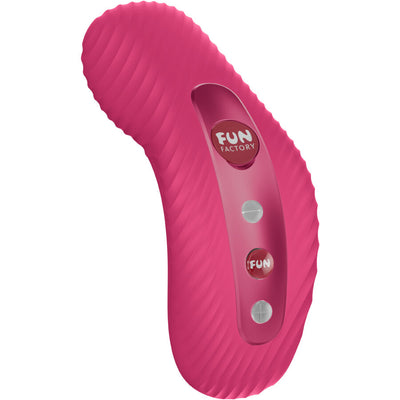
To help you through this step, you will find concrete guidance in our article on the first premium sex toy or in our vibrator / wand / stimulator guide , with a focus on sensations and comfort rather than performance.
6. Create intimacy rituals adapted to life with a baby
With an infant, waiting for the "perfect moment" is unrealistic: it never comes. However, you can create realistic micro-rituals.
6.1. The principle of mini-windows
Instead of a 2-hour romantic evening, aim for:
- 10 minutes of cuddling on the sofa while baby sleeps;
- a slow kiss in the kitchen while the bottle is heating;
- snuggling up to each other before falling asleep, even if you are dead tired.
6.2. Distribute the load to free up some space
It's difficult to crave sensuality when you feel alone in carrying the burden. (Talking about:)
- who gets up at night, and when;
- who manages medical appointments, laundry, and administrative tasks;
- how you can rebalance so that everyone has a minimum amount of energy.
Studies show that the division of labor and the perception of fairness within a couple influence relational and sexual satisfaction. Pinto & Veríssimo, 2023
7. Resume sexual relations gradually (if you wish)
When you're considering resuming penetrative sex, a few guidelines can help:
7.1. Medical check-up and pain
- talk to your healthcare professional about any pain (dyspareunia, burning, pulling sensations);
- think about the perineum : appropriate rehabilitation can improve comfort and sensations;
- Do not insist if the pain persists: pain is not inevitable. Consult a doctor.
7.2. Adapt the conditions
- use a good lubricant (hormones, breastfeeding and fatigue can decrease natural lubrication);
- choose a position where you retain control (for example, above, or to the side);
- start with a long sensual period (kisses, caresses) and only consider penetration if you really want it.
If you wish, some very soft, external sex toys for couples can also help you rediscover pleasure without pressure, in addition to caresses. The most important thing is that you feel safe in your body.
7.3. Redefining what constitutes "good sexuality"
A fulfilling sex life after having a baby isn't necessarily the same as what you experienced before. You can decide that, for now:
- The priority is on tenderness and security ;
- orgasm is not a mandatory goal;
- A skin-to-skin cuddle can be just as precious as full intercourse.
8. When should you ask for outside help?
Consulting a professional doesn't mean "things are bad," but that you're taking care of yourself (and each other). You can ask for help if:
- the pain persists despite time and adaptations;
- You haven't had any desires for a long time and it's causing you suffering;
- Sexuality is a source of recurring conflicts in the couple;
- You feel very sad, empty, anxious, overwhelmed (a possible sign of postpartum depression);
- You experienced a traumatic birth that keeps replaying in your mind.
Depending on the country, you can consult a midwife, gynecologist, general practitioner, sexologist, psychologist, or couples therapist. Many are experienced in addressing postpartum issues, including sexuality. 
Conclusion: Intimacy after baby is reinvented, it doesn't disappear
What you're experiencing isn't a glitch, it's a period of readjustment . Your body is changing, your rhythm is changing, your relationship is changing. It's normal for your intimacy to fluctuate for a while.
By taking the time to:
- respect your body's rhythm;
- bring back tender contact without pressure;
- talk about what you feel;
- take care of your body image;
- create realistic mini-rituals for two;
… you lay the foundations for a gentler, more conscious and often deeper sexuality than before.
You don't have to go back to "the way you were before." You can become "differently good," with this body, this baby, this changing relationship.
And if, later on, you want to add a little more fun to your intimacy, you can find inspiration in our couples' gift sets , our selections of sex toys for two , or our articles on sensual rituals and gifts .
FAQ: Intimacy and sexuality after baby
How long after childbirth can you resume sexual relations?
There is no universal date. Many healthcare providers recommend waiting until your postpartum checkup (around 6 weeks) before vaginal penetration to ensure proper healing and your overall well-being. However, sexual activity (cuddling, kissing, caressing, masturbation, sensuality) can resume sooner, at your own pace. Mayo Clinic, 2024 ; ACOG, 2018
I haven't had any desire for months, is that normal?
A decreased sex drive is very common in the first year: fatigue, hormones, mental strain, the body recovering… If it lasts a long time, causes you distress, or creates tension in your relationship, you can talk to a professional to assess the situation (fatigue, hormones, depression, pain, etc.). Studies show that 20 to 60% of women report sexual difficulties in the first 6 months postpartum. (Szöllősi et al., 2022 ; O'Malley et al., 2018)
If you wish to maintain a little sensuality despite a low libido, you can draw inspiration from our daily sensuality rituals , without any obligation to "take action".
What if my partner wants it more than I do?
It's common. The important thing is not to force yourself , but also not to ignore her emotional needs. You can explore forms of intimacy that work for both of you: cuddling, sex without penetration, time alone together, simultaneous masturbation… And plan to talk regularly about how your desire is evolving.
I experience pain during intercourse, what should I do?
Pain is not "normal," even if it's common after childbirth. It can be caused by:
- a perineal scar;
- vaginal dryness related to hormones or breastfeeding;
- hypertonia or weakness of the pelvic floor;
- a trauma of childbirth.
Talk to your midwife, gynecologist, or a physiotherapist specializing in pelvic floor exercises. Adapting positions, using lubricant, and progressing gradually can help, but if the pain persists, it's important to consult a professional.
Does breastfeeding decrease libido?
For some people, yes; for others, no. Breastfeeding alters hormones (especially estrogen), which can influence lubrication, fatigue, and mood. But it's not automatic. Again, it's the combination of factors (sleep, support, stress, self-image) that plays a role. If you have any questions, don't hesitate to discuss them at your postpartum appointment.
I prefer cuddling to sex at the moment, is that a problem?
No. For a while, your sexuality may be primarily emotional : cuddles, tenderness, skin-to-skin contact, massages. The important thing is that you talk about it, that your partner understands it's not a rejection, and that you maintain regular opportunities for connection. Desire can return, sometimes in a different form, when your body and mind feel more available.
When (and if) you want to take things further, you can then explore other resources such as choosing a first soft sex toy or our gift sets designed for couples .
Sources and resources for further exploration
To explore intimacy and sexuality after having a baby:
-
Postpartum sexual function & prevalence of difficulties
Gutzeit O. et al., 2019 – Postpartum Female Sexual Function: Risk Factors...
O'Malley D. et al., 2018 – Prevalence of and risk factors associated with sexual health issues after childbirth
Freitas GN et al., 2024 – Women sexual dysfunction in the postpartum period
Arampatzi C. et al., 2025 – Factors associated with postpartum sexual function -
Resuming sexual activity & recommendations
Mayo Clinic – Sex after pregnancy: Set your own timeline
ACOG – Optimizing Postpartum Care
Donarska J. et al., 2023 – Sexual functioning after childbirth -
Couple relationship & transition to parenthood
Bogdan I. et al., 2022 – Marital satisfaction across the transition to parenthood
Pinto TM, Veríssimo M., 2023 – Couple's relationship during the transition to parenthood
de Oliveira JM et al., 2023 – Systematic review of couple-focused interventions -
Body image, desire & postpartum sexuality
Gillen MM et al., 2025 – Body Image and Sex Among Postpartum Women
Talebi E. et al., 2022 – Improving body image and sexual life among postpartum women
Rastegari M. et al., 2019 – Effect of body image satisfaction on women's sexual function after childbirth
Bourne A. et al., 2023 – Navigating the postpartum period: body satisfaction & sexuality
These resources all point to the same message: difficulties with intimacy after having a baby are common , but there are many ways to navigate them gently and supportively, without pressure. And if you feel the need to give yourself a small, symbolic boost for this new stage (a couples' gift set , a very soft sex toy designed just for you …), always do it at your own pace, prioritizing your comfort.