Medications That Kill Libido, and What to Do About It
If your desire collapsed in the weeks following the start of a treatment, there is a good chance it is not you.
A great many ordinary medications act on desire, arousal or orgasm. This is not rare, marginal or psychological: it is a documented side effect, listed in the patient information leaflet, and yet rarely raised in consultation — the doctor does not always think of it, the patient does not dare.
The result is almost always the same: people attribute to their relationship, their age or themselves what comes from a tablet.
Before anything else, one absolute rule: never stop a treatment on your own initiative, and never adjust a dose yourself. Some abrupt withdrawals are dangerous. This article exists to help you identify a possibility and take it to your doctor — not to work around them.
Antidepressants
The class most involved, by a wide margin.
Serotonin reuptake inhibitors — the most commonly prescribed family — cause sexual effects in a substantial proportion of those treated. Figures vary a great deal with how the question is asked, but when patients are asked directly rather than waiting for a spontaneous complaint, they are high: a large share report at least one effect.
Concretely, three presentations:
- Reduced desire, usually the first and the hardest to live with.
- Difficulty reaching orgasm, up to complete anorgasmia, in women and men alike.
- Delayed ejaculation — which is precisely why this drug family is used in premature ejaculation.
The attribution trap
Here is the genuine difficulty, and it is only fair to state it: depression itself lowers libido. Untangling what comes from the illness and what comes from the treatment is not straightforward.
One useful marker: if desire was already flat before treatment and mood improves without sex following, the treatment is probably involved. If it collapsed within two to four weeks of starting, more clearly still.
What to do
Tell the prescriber, simply. This is not a comfort complaint: sexual side effects are among the leading causes of people stopping treatment early, which causes relapse. Reporting it therefore serves your mental health as much as your sex life.
Several levers exist on the doctor's side: dose adjustment, changing when it is taken, switching to a molecule with a more favourable profile, or adding a corrective treatment. All those decisions are theirs.
Hormonal contraception
More nuanced than commonly written, in both directions.
Combined pills raise a carrier protein that reduces free testosterone — the hormone that contributes to desire in women too. The mechanism is established.
In practice, most users notice no change, some find desire increases — the disappearance of pregnancy anxiety is not a small thing — and a real minority experience a marked drop. That minority is not imagining it, and being told « the pill has nothing to do with it » is a wrong answer.
Alternatives are numerous: a different dose, a different generation, non-hormonal contraception. It is a conversation worth having.
Dryness is another possible effect, distinct from reduced desire — covered in our guide to vaginal dryness.
Cardiovascular treatments
Beta-blockers and some diuretics are among the most frequent medication causes of erectile difficulty.
There is a confusion worth clearing here, and it matters: hypertension itself damages blood vessels and causes erection problems. The treatment is sometimes blamed for what the illness was already doing.
In every case the conclusion is the same: you do not stop a blood pressure medication. You raise it, because therapeutic classes do not all share the same profile and a switch is often possible.
Prostate and hair-loss treatments
Finasteride and dutasteride, prescribed for prostate enlargement and, at lower doses, for hair loss, can cause reduced libido, erectile difficulty and reduced ejaculate volume.
These effects concern a minority of users and generally resolve on stopping. Cases of persistent problems have been reported and are subject to pharmacovigilance monitoring: the subject is debated, and it deserves honest disclosure before starting a cosmetic treatment.
Other classes
| Class | Most reported effect | Note |
|---|---|---|
| Antipsychotics | Collapse of desire | Via raised prolactin, measurable with a blood test |
| Long-term opioids | Reduced desire, erectile difficulty | Testosterone collapse, frequently overlooked |
| Antihistamines | Mucosal dryness | Mechanical effect, easily compensated |
| Antiepileptics | Reduced desire | Varies by molecule |
| Long-term corticosteroids | Reduced desire | Via the hormonal axis |
| Regular alcohol | Erection, orgasm | Often the largest factor, and the least mentioned |
How to raise it with your doctor
This is the part that stalls, so let us be practical. Three sentences are enough:
- « Since starting this treatment, I have noticed this change. »
- « It began roughly at this date. »
- « Could the medication have something to do with it? »
That last phrasing is the most effective: it opens the discussion without challenging the prescription, and it gives the doctor an opening to check a possibility they may not have considered.
Note the chronology before the appointment — when the treatment started, when the change appeared. It is the single most useful piece of information for the diagnosis, and the hardest to reconstruct on the spot.
What helps in the meantime
A treatment is reassessed over weeks, sometimes months. Here is what improves daily life meanwhile — alongside the medical route, never instead of it.
When orgasm becomes hard to reach
This is where an accessory genuinely changes something. More intense, more sustained stimulation partly compensates for the raised threshold the treatment creates.
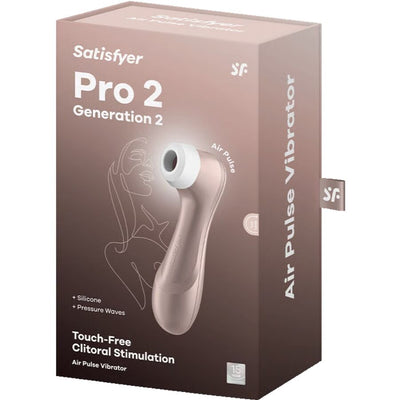
Pressure-wave stimulators are the most effective here, because they produce high intensity without friction: the Satisfyer Pro 2 at €56.99 is the reference. If sensitivity is markedly reduced, a Satisfyer Wand-Erland at €56.99 offers more power and a broader contact surface. Our stimulator comparison explains the four technologies.
Two pieces of advice that cost nothing: allow far more time than before, and drop the objective. Under this kind of treatment, chasing orgasm is the surest way not to reach it.
When it is the erection
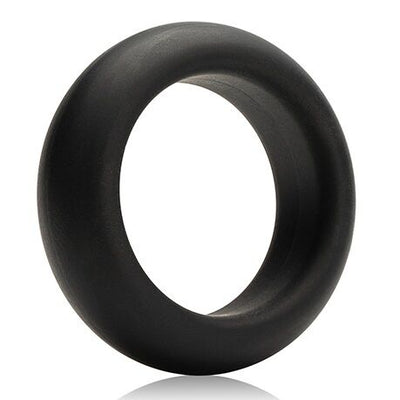
A cock ring at €10.99 helps maintenance by a purely venous mechanism, independent of the treatment. Twenty minutes maximum, remove immediately if numbness occurs — the rules are in our cock ring guide.
When it is dryness
The simplest to fix. A lubricant with no fragrance or glycerin such as the SWEDE Original Sensitive at €12.99 is enough in most cases; an intimate moisturiser takes over if discomfort persists outside sex.
And the relational side
Telling a partner prevents the most common misreading, which is to see it as lost interest. « It is my medication, not you » defuses a great deal. Our guides to sex without penetration and slow sex help you get through the period differently.
Frequently asked questions
Can I stop my treatment if the effects are unbearable?
Not on your own. Abruptly stopping some medications is dangerous, and stopping an antidepressant risks relapse. There is almost always an alternative: discuss it with the prescriber.
Do the effects go away on stopping?
In the large majority of cases, yes, within a few weeks. Persistent situations have been reported for certain molecules and are monitored by regulators; they remain a minority.
How do I know whether it is the drug or the illness?
Chronology is the best clue. A change appearing within weeks of starting, or after a dose increase, points strongly at the treatment. Note the dates — they are worth a long explanation.
My doctor says it is unrelated. What now?
Sexual side effects of these treatments are documented and appear in the patient leaflet. You can read the side effects section of yours, and seek a second opinion if the answer stays the same. You are not imagining this.
Does the pill really lower libido?
In a minority of women, yes, through an identified hormonal mechanism. In the majority the effect is neutral or positive. Both realities coexist, and yours counts: other options exist.
Do alcohol and cannabis matter?
Yes, and often more than the medication being blamed. Regular alcohol impairs erection and orgasm; daily cannabis reduces desire in some users. Worth mentioning in consultation, without fear of judgement.
Are there supplements that compensate?
Nothing solid. Products sold to « boost libido » rest on no serious demonstration, and some interact with ongoing treatments — St John's wort in particular, which is anything but harmless. Ask before taking any.
In short
If your sex life changed after a treatment started, note the chronology and put the question to your doctor in its simplest form: « could the medication have something to do with it? »
Stop nothing on your own, and do not assume you must choose between being treated and having a sex life. In most situations there is a dose, a timing or a molecule that allows both.
While the adjustment happens, more time, more intensity, and a lubricant within reach cover the essentials.
Our clitoral stimulators and lubricants and intimate care complete this reading.