Premature Ejaculation: The Numbers, and What Actually Works
Start with the number missing from almost every conversation on this subject. In the largest study ever run — five countries, nearly five hundred couples, stopwatch in hand — the median time from penetration to ejaculation was 5.4 minutes.
Not twenty minutes. Not fifteen. Five and a half, with half of all men below it.
That figure has to come first, because most of the distress around this subject comes from measuring yourself against a standard that has never existed outside fiction. Before looking for a solution, establish whether there is a problem.
What « premature » clinically means
Three criteria, all required
- Timing. Ejaculation consistently before or within about a minute of penetration, where the pattern has always existed. Around three minutes or less where it developed later.
- Lack of control. An inability to delay on nearly all occasions.
- Distress. Genuine frustration, bother, sometimes avoidance of intimacy.
The third is the most important and the most often forgotten. A man who finishes in two minutes and whose sex life suits him and his partner does not have a disorder. He has a duration.
The gap between belief and reality
Between 20 and 30 percent of men report having premature ejaculation. Apply the criteria above and the figure falls to roughly 4 percent.
That gap is not a methodological footnote. It represents an enormous number of people who believe they are abnormal and are not. For many, the first useful intervention is not treatment — it is the information you have just read.
Lifelong, or recent?
This is the question that directs everything else, and the first one a doctor will ask.
Lifelong means present from the earliest sexual experiences. It reflects a predisposition, with a documented neurobiological component related to serotonin receptor sensitivity. It is not a failure of willpower or education.
Acquired means it appeared after a period when everything was fine — and there, the change is a signal. It has a cause, and finding it beats treating the symptom.
Common causes include emerging erectile difficulty (unconsciously rushing before the erection is lost), an overactive thyroid, prostatitis, new anxiety, alcohol, or relationship strain.
The first deserves emphasis, because it is common and rarely identified: rapid ejaculation is sometimes the first visible sign of an erection problem, which is itself sometimes the first visible sign of a cardiovascular one. That is reason enough to see a doctor.
What works, ranked by evidence
Pelvic floor training
The best-documented non-drug approach, and the most ignored.
The pelvic floor is not a women's concern. In men, the bulbospongiosus and ischiocavernosus muscles participate directly in the ejaculatory reflex. Training them provides voluntary control where there was none.
An Italian study followed forty men with lifelong premature ejaculation through twelve weeks of pelvic floor rehabilitation. Mean time rose from about 32 seconds to 146 seconds — more than a fourfold increase. The sample is small and that should be said, but the effect is clear and the protocol costs nothing.
In practice: identify the muscle by briefly interrupting urine flow — once, to locate it, not as the exercise. Then, with an empty bladder, contract for three seconds and release for three, ten times, three times a day. The release matters as much as the contraction. Allow six to twelve weeks before judging.
Behavioural techniques
Old, free, and effective — particularly combined with the above.
Stop-start means stimulating until close to the point of no return, stopping completely until arousal subsides, and resuming. Three cycles, then let it happen on the fourth. The aim is not endurance: it is learning to recognise the point of no return early enough. That is a perceptual skill, and it is trainable.
The squeeze technique adds firm pressure below the glans during the pause. It works, but it is hard to integrate with a partner without breaking the moment.
One point rarely made: these are learned alone first. Trying to discover them mid-encounter adds exactly the pressure you are trying to remove.
Medical treatment
Effective, and prescription-only. We are not doctors and this paragraph does not replace a consultation.
Dapoxetine is a short-acting serotonin reuptake inhibitor developed for this indication and taken on demand. Other drugs in the same family are sometimes used continuously, off-label. Either way: prescription and follow-up.
Topical anaesthetics reduce sensitivity. They work, with two real caveats: they reduce pleasure, and they transfer to a partner, causing unwanted numbness. A condom limits the transfer — see our guide to condoms.
| Approach | Evidence | Time to effect | Cost | Main caveat |
|---|---|---|---|---|
| Pelvic floor training | Good, small samples | 6 to 12 weeks | None | Requires consistency |
| Stop-start / squeeze | Good, long-established | Several weeks | None | Learn alone before using with a partner |
| Oral prescription | High | Immediate to days | Consultation | Side effects, prescription required |
| Topical anaesthetic | High | Immediate | Low | Reduces pleasure, transfers to partner |
| Cock ring | Weak for timing | Immediate | £7 to £50 | Acts on erection, not ejaculation |
| Sex therapy | Good, especially as a couple | Months | Consultation | Needs both partners |
Where accessories genuinely help
We sell these products. All the more reason to be precise about what they do and do not do.
The cock ring misunderstanding
A ring does not delay ejaculation. It slows venous return and maintains an erection. These are not the same thing, and product listings routinely blur them.
That said, it acts on a real mechanism. When the rushing comes from anxiety about losing the erection — very common in the acquired form — the ring breaks the loop: the erection holds, the urgency subsides, and the hurry with it.
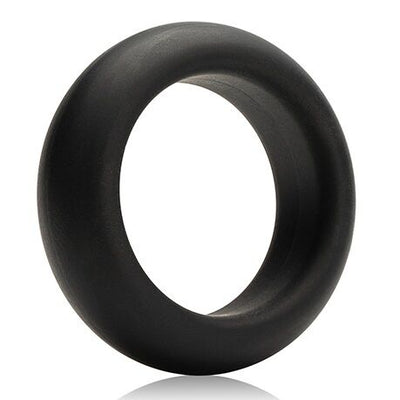
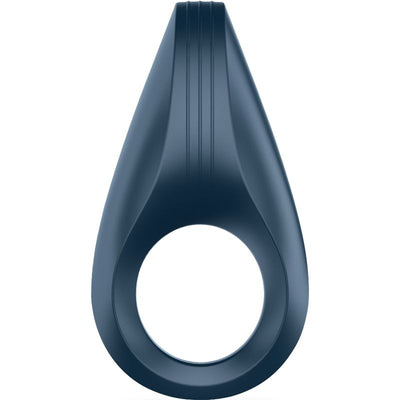
To try without committing, the JE JOUE cock ring at €10.99 in soft silicone is enough. The Satisfyer Ring 1 at €33.99 adds vibration aimed at a partner's clitoris — useful, because it moves the stakes away from penetration duration. Full detail, including the twenty-minute rule, in our cock ring guide.
Sensor-equipped strokers
The most relevant use, and the least known.
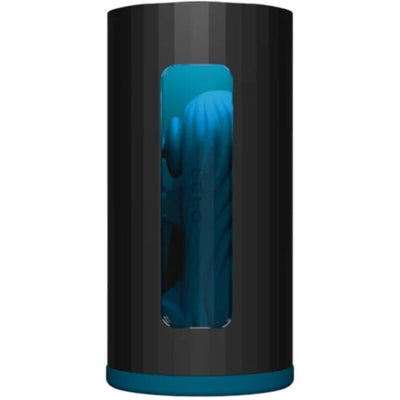
Stop-start has a weakness: you have to estimate your own arousal at precisely the moment your judgement is least reliable. The LELO F1s™ V3 contains sensors that report actual intensity to an app. You stop guessing and start reading, and you can compare one session to the next.
For a €186.99 object, let us be blunt: a hand is free and the protocol works with nothing at all. What you are buying is objective feedback and repeatability. Some people get a great deal from that; others do not. Our guide to strokers covers alternatives from €5.99.
External vibrators
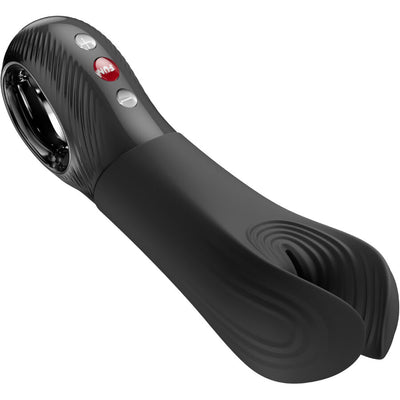
The FUN FACTORY Manta at €43.99 is used along the shaft rather than as a sleeve. Its value here is indirect but real: it lets you keep giving pleasure during a pause, which makes stop-start bearable with a partner. A pause stops being an awkward interruption when it becomes something else.
What we do not sell, and why
You will find no delay sprays in our catalogue. That is not an oversight.
They work by anaesthetising. They treat sensation rather than control, they reduce the pleasure of the person applying them, and they transfer to a partner. We would rather not stock them than sell them while staying quiet about those three caveats. If you want to try that route, a pharmacist will advise you better than we can.
Same position on « endurance » supplements: nothing solid supports the claims.
The partner side
A point most articles on this subject avoid: penetration duration is not the primary determinant of a partner's satisfaction. Most women do not reach orgasm through penetration alone, at any duration. Lengthening intercourse therefore does not mechanically solve what people assume it solves.
This is not a consolation prize; it is a useful relocation of the stakes. Four minutes preceded and followed by other things generally satisfies better than fifteen minutes that consist only of themselves. Our guides to sex without penetration and making things last as a couple both develop that ground.
Then there is the silence. Premature ejaculation is very often experienced alone, including within a couple, and a partner reads the withdrawal as disinterest. Saying something, however clumsily, almost always defuses more than it exposes.
Frequently asked questions
How long should sex last?
The measured median is 5.4 minutes, with an enormous spread — under a minute to over forty. There is no norm, only a distribution, and half of all men are below five and a half minutes.
Can it be cured permanently?
The acquired form often can, by treating its cause. The lifelong form is managed rather than cured, but combining pelvic floor work, behavioural technique and, where needed, medication produces substantial and durable improvement.
Does a cock ring delay ejaculation?
Not directly. It maintains the erection. There is an effect on duration when the rushing came from anxiety about losing the erection, which is common, but the mechanism is indirect.
Does masturbating beforehand help?
It often lengthens the second encounter, especially in younger men. It is a temporary crutch rather than a solution: it develops no control, and the effect fades with age.
Who should I see?
A general practitioner is an excellent starting point and will refer you to a urologist or a sex therapist depending on what they find. Go if it persists, if it bothers you, or if it appeared recently without explanation.
Do pelvic floor exercises really work for men?
Yes. The muscles involved participate in the ejaculatory reflex, and the available data — though on small samples — show clear gains. It is free, risk-free, and takes six to twelve weeks of consistency.
Does stress play a part?
A major one, and in both directions: it accelerates, and then the fear of being too quick accelerates it further. Breaking that loop is often the decisive part of treatment.
In short
First establish whether there is a problem at all. A great many men who believe they are affected are comparing themselves to an imaginary figure, and the information is the whole intervention.
If the problem is real and recent, find the cause before the remedy: see a doctor. If it has always been there, start with what is free and documented — pelvic floor and stop-start, six to twelve weeks, alone first — before considering medication with a doctor.
Accessories are support, never the front line. An €11 ring removes erection anxiety; a sensor-equipped stroker makes training measurable. Neither replaces the weeks of practice that actually change something.
Our cock rings and toys for men are here.