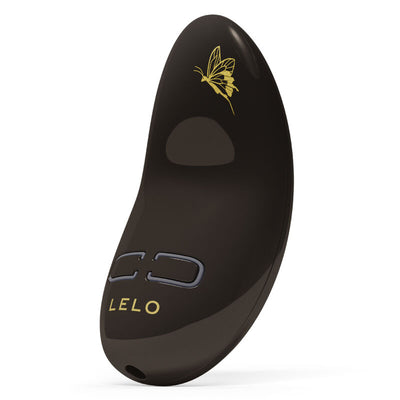
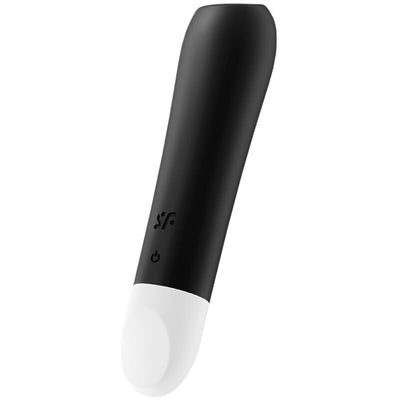
Sex toys for couples: what to do if desires differ?
Sex toys for couples: what to do if desires differ?
You want to incorporate a sex toy into your relationship, but your partner is hesitant.
With all fours? Or on the contrary, is it he/she who suggests it, and you feel embarrassed?
Not ready, or even downright uncomfortable?
This discrepancy is much more common than you think. Today, more than
Half of women have already used a vibrator, and a significant proportion integrate it
also in relationships between two people, generally with better sexual satisfaction
and very few negative effects. Herbenick et al., 2009 ; Rapkin, 2024. If you want to see for yourself
To see what it might look like in practice, you can take a look at our selection of
vibrators and sex toys for couples .
But that doesn't mean everyone is comfortable with sex toys, or in the same way.
rhythm. And when desires diverge, one can quickly feel:
- judged ("you are naughty / too prudish / not open enough");
- called into question ("am I not enough for you?");
- guilty of blocking or asking for too much.
In this article, you will see how:
- understand where this discrepancy comes from;
- raise the subject without confronting the other person;
- find compromises (or alternatives) without betraying yourself;
- to strengthen trust instead of allowing unease and unspoken issues to fester. For
To delve deeper into the emotional dimension, you can also read our article on jealousy.
facing sex toys .

1. Having differing opinions about sex toys: this is normal, and it's not a "red flag" in itself.
Before looking for a solution, it's important to normalize what you're experiencing.
Studies show that:
- Approximately 52% of women in the United States have used a vibrator, and over 40% sometimes incorporate it into sexual activity with a partner; Herbenick et al., 2009
- The possession and use of sex toys (alone or with a partner) are associated with greater sexual and life satisfaction , not with a decline in relationship quality; Hald et al., 2025 ; LeShaw, 2024
- The use of vibrating devices is linked to improved arousal, orgasm, and satisfaction , with very few reported side effects. Rapkin, 2024
At the same time, we also know that many people have negative or anxious perceptions of sex toys (fear of judgment, feeling like they're "cheating," fear of being replaced, etc.). So yes, it's very possible that you see sex toys as an added bonus, while your partner sees them as a threat or a taboo.
This difference doesn't mean you're incompatible. It mainly means: " We don't have the same history, the same pace, or the same references ." And that's exactly what we also explore in our article "Jealousy over sex toys: how to reassure and soothe? "
2. What each person projects (often unconsciously) onto the sex toy
Behind a "I want it" or a "I don't want it", there are often very different perceptions.
What a sex toy can symbolize for someone who wants to know
- a way to vary the sensations without changing partners;
- a tool to get to know each other better and to better share what feels good;
- a way to reduce the famous "orgasm gap" (the difference in orgasm between genders) and increase everyone's pleasure.
What it can symbolize for someone who refuses or hesitates
- the fear of not being enough ("if you need that, it means I'm not doing enough");
- the feeling of entering a world that is "too much" (too pornographic, too technical, too intimidating);
- values or an education where sex toys were taboo or ridiculed;
- a feeling of loss of control or vulnerability.
Addressing disagreement solely in terms of "right/wrong" risks trapping you. The idea is rather to ask yourself, " What does this request awaken in me? " and dare to put it into words. If what it awakens resembles jealousy, you can find other concrete suggestions in our article dedicated to jealousy regarding sex toys .
3. How to broach the subject without making the other person feel judged or pressured
Research shows that sexual communication is strongly linked to sexual and relationship satisfaction . In a meta-analysis of 48 studies, better communication about sex was associated with greater desire, arousal, satisfaction, and less pain. (Mallory et al., 2021)
The good news is that this type of communication can be learned and become truly exciting. We discuss it in detail in Yes Set: The Method of Exciting Consent .
Speak in the first person ("I"), not in the second person ("you").
Rather than:
- "You're not open enough";
- "You're blocking everything";
Try this instead:
- "I'm curious to explore this with you. I feel like it could bring us new sensations."
- "When I think about using a sex toy, I feel excited but also a little embarrassed; I'd like to talk about it."
Validate your emotions, even if you don't agree
You can say, for example:
- "I understand that this might make you uncomfortable."
- "It's important to me that you feel safe; we won't do anything that will startle you."
Clarify your intention
Examples:
- "My intention is not to replace you, but to give us more options."
- "I don't want it to be an obligation, but rather a playground if we both feel like it."

4. When one is very keen… and the other not at all
If you're very misaligned, it can quickly create frustration on one side and a feeling of pressure on the other. Here are some tips to avoid this impasse.
4.1. Understanding what is really blocking the movement
Instead of simply saying "no," you can ask gently:
- "What bothers you most about this idea?"
- "Is it the sex toy itself, the image you have of it, the fear of doing it wrong, or something else?"
Often, the problem is not the object, but the meaning we give it.
4.2. Propose a "yes, but"
If the other party is not completely closed off, but worried, you can negotiate a:
- "yes, but... we start with a very simple model" (for example a massage accessory, an external toy, not intimidating);
- "yes, but... we'll try it first without you using it on me" (just to see it, touch it, get used to the object);
- "Yes, but... we give ourselves the right to say stop immediately" without it being a failure.
For this first step, ranges of couple sex toys or some very simple external vibrators can be reassuring "gateways".
4.3. Also accept the possibility of a "no"
Consent implies that "no" is possible. If your partner really doesn't want to include sex toys in your sex life, several options exist:
- respect this "no" for moments as a couple, while keeping the option to use a sex toy solo if that's okay with you;
- return to the subject later if the context changes, without insisting on it in every report;
- Discuss with a sexologist if this disagreement creates a lot of tension or touches on deeper wounds.
5. Finding common ground: concrete suggestions
If you want to try something, but gently, you can look for a compromise rather than a big leap.
5.1. Choosing "gateway" accessories
For example :
- massage oils or candles (with caution and products suitable for the body);
- soft petting accessories (textiles, feathers, etc.);
- a small, simple external vibrator, used initially in a playful context, without any performance concerns.
You can find this type of product in our selection of sex toys for couples or in certain couples' gift sets , designed specifically for progressive exploration.
5.2. Doing research together
Instead of arriving with a pre-purchased sex toy, you can:
- look together at reputable online shops or educational resources;
- read the descriptions, ask questions, see what intrigues or repels each person;
- Agree on a budget and a type of product that respects both of your limits. Sexual Health Alliance – Navigating your journey through the world of sex toys
5.3. Establish clear rules
For example :
- "We only use it when we both agree on it that day."
- "We can say stop at any time, without justification."
- "We have a short debrief afterwards: what we keep, what we change, what we avoid."
If you like question/answer games to talk about all this more easily, the article 10 ideas to transform a banal evening into a sensual moment offers ideas for rituals and intimate questions.
6. When sex toys cause fear: comparison, jealousy, feelings of inadequacy
Many people (often men, but not only) are afraid that a sex toy will become a "competitor." However, studies show that:
- The use of sexual devices in couples is associated with greater orgasmic intensity and satisfaction for women, with no link to psychological disorders or a decline in relationship quality; Sansone et al., 2025
- Men who have used a couples' vibrator overwhelmingly report that it increases their partner's pleasure and their own , as well as feelings of intimacy. Watson et al., 2016
- Couple satisfaction is more closely linked to communication and listening than to the absence of sex toys. Mallory et al., 2021
In practical terms, you can reassure your partner by explaining that for you:
- A sex toy is a tool, not a replacement ;
- What matters is not the object, but who holds it, with what intention, in what relationship ;
- You're trying to increase everyone's enjoyment, not to establish a ranking.
If this topic is strongly related to jealousy or insecurity, you can complement this reading with our article on jealousy in relation to sex toys , which offers very concrete phrases and frameworks to reassure each other.
If, despite everything, the feeling of comparison is very painful, it is a signal that there may be broader work to be done on self-esteem – with or without a professional.
7. And if, despite everything, the desires remain truly opposed?
Sometimes, even with dialogue, compromise, and time, you may still disagree. In this case, the challenge is to protect:
- respecting everyone's limits ;
- the possibility of enjoyment for everyone (including solo);
- the quality of the link (do not reduce the entire relationship to this difference).
Possible options:
- Decide that sex toys will not be part of your practices as a couple, but that the person who wants them can use them solo, within a clear framework that you will have defined.
- Try other ways to revitalize your sex life (atmosphere, communication, slow sex, focusing on pleasure without penetration…) without using accessories. The article "10 Ideas to Transform an Ordinary Evening into a Sensual Moment" can give you some very concrete suggestions in this area.
- Consult a sexologist or couples therapist if this issue is part of a broader set of tensions surrounding desire, pleasure, or the body. Introduction to sex therapy
Refusing a sex toy isn't refusing pleasure. The reverse is also true: wanting one doesn't make you "excessive." The challenge is to be able to talk about all this without hurting each other .

Conclusion: sex toys are just a tool; your connection remains the heart of the matter.
Whether you end up incorporating a sex toy or not, the real question isn't the object itself. It's:
- Can we talk about our desires, our fears, our curiosities without judging each other?
- Do we know how to set clear boundaries, without guilt and without blackmail?
- Are we looking for solutions together, rather than for someone to blame?
Recent studies all point in the same direction: sex toys can be great allies for pleasure and connection when introduced with communication, consent and curiosity – but they never replace the quality of the bond.
Ultimately, the real question is not "sex toy or no sex toy", but "how do we take care of our pleasure and intimacy, where we are, both of us".
If you want to continue to develop this reflection, you can explore our other articles in the Info & Guides section (on consent with the Yes set , jealousy in the face of sex toys , or even sensual evenings ) and discover our couple sex toys , vibrators and couples sets if you want to put them into practice.
FAQ: sex toys for couples & divergent desires
Is it worrying if I want a sex toy and my partner doesn't?
No. You have different histories, references, and sensitivities. This isn't in itself a sign of incompatibility, but rather a subject for negotiation and dialogue . What would be more concerning is the complete impossibility of discussing it without contempt or aggression. To help you talk about it without alienating the other person, you can draw inspiration from the communication strategies offered in Yes Set: The Method of Exciting Consent .
Are sex toys likely to push us apart instead of bringing us closer together?
The available data suggests the opposite: owning and using sex toys (alone or with a partner) is often associated with greater sexual, relational, and even overall life satisfaction . (Hald et al., 2025 ; LeShaw, 2024) The risk stems more from a lack of communication or imposed use without consent. Choosing a model together from couples' sex toys or couples' kits can already be a way to co-create.
What if I feel "less than" when faced with a sex toy?
This feeling is common, especially in a context where many cultural messages link performance to personal worth. However, research shows that sex toys are more complements than competitors, and that what truly enhances pleasure is attention, tenderness, listening, and the ability to adjust, far more than technical perfection. (Watson et al., 2016) The article "Jealousy Regarding Sex Toys" may also help you put things into perspective.
Can I use a sex toy on my own if my partner doesn't want to use it in our sex life?
Yes, many people make that distinction. The important thing is to talk about it openly so it's not perceived as a secret or a betrayal. You can decide together what is shared and what isn't (for example, you can say you use them, without going into details if the other person doesn't want to know). And if you're looking for a model for yourself, you can check out our vibrators or gift sets , depending on your preferences.
How can I tell if I'm putting too much pressure on my partner?
Some warning signs: they seem tense when you bring up the subject, consistently avoid the conversation, agree but with a nervous laugh or by disengaging, or explicitly tell you they feel obligated. In this case, take a step back , reassure them, and reaffirm that your connection matters more than the object itself. You can use the wording suggested in our article on the "Yes Set" and exciting consent to maintain a respectful approach.
When is it useful to consult a professional (sexologist, couple therapist)?
If this topic is bringing to the surface broader conflicts (about desire, trust, communication), if you feel ashamed or guilty about your desires, or if one of you has a history of trauma related to sexuality, therapy can offer a safe space to explore fears, needs, and boundaries without judgment. Sex therapy – principles & techniques
Sources and resources for further exploration
To delve deeper into the topic of sex toys, sexual satisfaction, and communication within a couple:
-
Prevalence and effects of sex toys
Herbenick D. et al., 2009 – Prevalence and characteristics of vibrator use by women
Reece M. et al., 2009 – Vibrator use by men
Hald GM et al., 2025 – Do Sex Toys Make Me Satisfied?
LeShaw, 2024 – Solo and partnered sex toy use
Rapkin AJ, 2024 – A deep dive into devices for sexual health
Sansone A. et al., 2025 – Toys in the bedroom -
Sex toys, intimacy and sexual health
AASECT – Erotic Toys and Health
Sexual Health Alliance – Navigating your journey through the world of sex toys -
Sexual communication & couple satisfaction
Mallory AB et al., 2021 – Dimensions of couples' sexual communication
Younis I. et al., 2021 – Sexual communication and women's pleasure
Therapy Trainings – Sex therapy: principles & considerations -
Men's perceptions of sex toys
Watson ED et al., 2016 – The impact of a couple's vibrator on men's perceptions
These resources all converge on a central idea: sex toys can be tools for shared pleasure, but it's how you talk about them and incorporate them (or not) that makes the real difference. To further explore this idea and ease into using them (or not), you can continue reading in our Info & Guides section and discover our couples' sex toys , vibrators , and couples' gift sets .