Sex Toys and STIs: What Actually Transmits
Short answer first: a sex toy creates no infection. A new object, out of its box and used alone, transmits nothing to anyone.
But it can carry one. From one person to another, or from one part of the body to another. And on that precise point, what it is made of changes everything — which is the part product pages never mention.
This article covers what genuinely survives on a surface, the three situations that create risk, and what actually protects. It does not replace testing, and it says so more than once.
What survives on an object
Infectious agents do not behave alike outside the body. Some die within seconds in open air; others persist.
The ones most relevant to transmission via an object are HPV, herpes, trichomoniasis, and the bacteria responsible for chlamydia and gonorrhoea. HIV, by contrast, is very fragile outside the body: this is not its route of transmission.
A 2014 study looked for traces of HPV on vibrators after use. The striking finding was not that they found some — it was that it was still detectable after cleaning on certain materials, where others were far easier to sanitise. Which brings us to the heart of the matter.
Material: the deciding factor
This is the most useful information in the article, and it has a direct consequence for what you should buy.
Porous materials
TPE, TPR, soft PVC, « jelly » and realistic synthetic skins all have a microporosity invisible to the eye.
Those micropores hold moisture, organic residue and micro-organisms. You can clean the surface; you cannot sterilise it. That is a physical limit, not a technique failure: no product reaches what has lodged inside the material.
So these objects should never be shared, even cleaned. And they have a limited lifespan.
Non-porous materials
Medical-grade silicone, borosilicate glass, stainless steel and glazed ceramics have no porosity. Nothing penetrates the surface, so everything on it can be removed.
These are the only materials that permit sharing, after thorough cleaning, and the only ones that can genuinely be described as sanitisable.
| Material | Porous | Can be shared | Lifespan |
|---|---|---|---|
| Medical-grade silicone | No | Yes, after full cleaning | Very long |
| Borosilicate glass | No | Yes | Very long |
| Stainless steel | No | Yes | Very long |
| ABS (hard plastic) | No | Yes, if seamless | Long |
| TPE / TPR / jelly | Yes | No, even cleaned | Limited |
| Realistic synthetic skin | Yes | No | Limited |
This does not condemn porous materials — many realistic strokers are made from them, and nothing else feels the same. It means they are strictly personal, and they get replaced.
The three situations that create risk
Sharing between partners
The main route, and it applies to established couples too: if one of you carries an infection without knowing — the most common situation — the object circulates it.
Two solutions, one immediate and one more rigorous. The simplest: a condom on the object, changed every time it changes person. A latex-free option avoids the allergy question and reacts less with silicone. The more rigorous: thorough cleaning between uses, which only works on non-porous materials.
Moving between body areas
Not an STI, but the most frequent source of trouble: going from the anus to the vagina with the same object transports gut flora somewhere it has no business being. Recurrent cystitis and bacterial vaginosis often start here, and nobody makes the connection.
The rule allows no exception: anal last, or change the condom in between, or use a dedicated object. Our anal pleasure guide covers the rest.
Second-hand objects
It looks obvious written down, and the listings exist anyway. A sex toy is not bought second-hand, whatever the material and whatever the seller claims. It is the one piece of advice here that is not up for discussion.
Cleaning, in practice
Before and after use. The « before » is the one people skip, yet an object that has sat in a drawer for three weeks is not clean.
For everyday use, warm water and mild soap are enough on a non-porous surface. A dedicated cleaner is preferable for electronic items that cannot be rinsed, and for anything with texture or seams where soap gets trapped.
Three points often missed: drying completely before storage, since residual moisture is the real problem; storing items separately, as silicones of different grades can react with one another; and never putting anything electronic into boiling water. Full detail in our care guide.
Protections that work
On the object
A condom remains the simplest and most reliable method for a shared object. Changed between people and between areas, it resolves the first two situations in a single move.
For oral sex
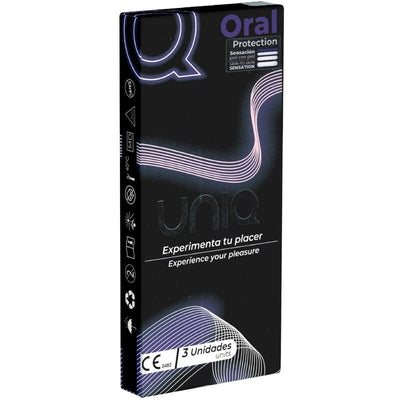
The least protected practice, despite several infections transmitting through it readily — pharyngeal gonorrhoea and herpes in particular. A dental dam provides a barrier for oral-vulval and oral-anal contact; failing that, a condom cut lengthways does the same job.
The internal condom
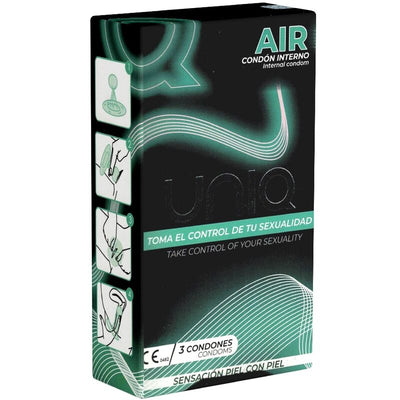
Less known, with a real advantage: it covers a wider area and can be inserted in advance. Our guide to condoms compares materials and sizes.
Lubricant compatibility
Two rules stack here. Oils and greasy products destroy latex and render a condom useless. And silicone lubricant attacks silicone objects over time. Water-based lubricant is compatible with everything, which makes it the default the moment a condom is involved — see our guide to lubricants.
Testing
This is the part no amount of cleaning replaces.
Most sexually transmitted infections are asymptomatic for long periods. The absence of symptoms proves nothing at all, in you or in a partner, and that is precisely what keeps them circulating.
Testing is warranted with each new partner, before dropping condoms in a relationship, after a risk, and periodically with multiple partners. It is simple, often free, and available without a prescription in many places.
And if you have a doubt, see a doctor — not a web page, this one included.
Frequently asked questions
Can I catch an STI from my own toy?
No, provided it stays strictly personal and is cleaned properly. An object generates nothing: it only carries what already exists.
Does a dishwasher sterilise a sex toy?
Pure silicone, glass and steel with no electronics generally tolerate it, no detergent, top rack. Anything with a motor, battery or seam should be excluded. When in doubt, do not: a destroyed object costs more than a cleaner.
Should I boil my toys?
Possible for 100% silicone, borosilicate glass and steel, for a few minutes, provided there is no electronics. For the vast majority of objects it is unnecessary and destructive.
Is a condom enough to share an object?
It is the recommended method, provided it is changed with each change of person and area. On a porous material it is the only acceptable option, since such an object cannot be sanitised.
How do I know if my toy is porous?
The composition should be stated. Failing that, two clues: a very soft object, slightly tacky to the touch or giving off a plastic smell, is almost always porous; medical-grade silicone is matte, odourless and does not cling. When in doubt, treat it as porous.
Do STIs transmit via hands?
Possible for some, when secretions are transferred from one mucous membrane to another. Washing hands before and between partners or areas is not an excessive precaution.
How often should a porous object be replaced?
There is no official lifespan. Replace it once the surface becomes tacky, dulls, changes texture, or holds a smell after cleaning. Those are signs the material is degrading.
In short
A personal, non-porous object cleaned before and after use presents no infection risk. What creates risk is sharing, moving between areas, and materials that cannot be sanitised.
Three habits cover the essentials: choose medical-grade silicone, glass or steel for anything meant to last or be shared, put a condom on the object whenever it changes hands or areas, and dry it completely before storing.
And because none of that replaces the rest: get tested with each new partner. Most infections give no warning.
Our hygiene accessories and medical-grade silicone toys complete this reading.