10 Sex Toy Mistakes Worth Avoiding
Almost every problem people have with sex toys traces back to a short list of mistakes. Not exotic ones — ordinary, easily made, and rarely mentioned on the product page.
Some of them ruin an expensive object. Some cause infections. One of them sends people to hospital, and it is entirely preventable.
Here is the list, in roughly the order of how much trouble each one causes.
1. Not knowing whether the material is porous
This is the mistake everything else follows from.
TPE, TPR, soft PVC, « jelly » and realistic synthetic skins are porous. They contain microscopic pores you cannot see. Those pores hold moisture and bacteria, and no cleaning product reaches into them. You can clean the surface; you cannot sterilise the material.
Medical-grade silicone, borosilicate glass and stainless steel are not porous. Nothing gets into the surface, so everything can be removed from it.
This is not an argument against porous toys — many realistic strokers are made this way and nothing else feels quite like them. It means those toys are strictly personal, and they wear out. Non-porous toys are the ones that can be shared and the ones that last for years.
If the listing does not state the material, assume porous. A genuinely soft, slightly tacky toy with a faint plastic smell almost always is.
2. Using silicone lubricant on a silicone toy
Silicone lubricant slowly degrades silicone. The surface goes tacky, then starts to break down, and the damage does not reverse.
Water-based lubricant is compatible with everything — every toy material and every condom. It is the sensible default, and the reason to reach for anything else is rare. Our guide to lubricants covers the exceptions.
3. Using oil with condoms
Oils and any greasy product destroy latex. Not weaken — destroy. A condom exposed to massage oil, coconut oil or petroleum jelly can fail without any visible sign beforehand.
If a condom is involved at any point, the lubricant is water-based. There is no negotiating this one.
4. Not using lubricant at all
The most common reason a toy « does not feel good » after a few minutes is friction, not the toy.
This applies even when natural lubrication is plentiful, because silicone and glass do not behave like skin. And it applies absolutely to anal use, where there is no natural lubrication at all — our anal pleasure guide covers that in detail.
5. Starting at maximum
Almost everyone turns a new toy straight to its highest setting, finds it uncomfortable or numbing, and concludes that toys are not for them.
Start at the lowest setting. Build up. Powerful motors exist for people who need them, not as a default. If a sensation is unpleasant, that is information, not a challenge.
6. Anal toys without a flared base
This is the mistake that ends in an emergency room, and it is the reason this list exists.
The rectum has no natural stopping point. Muscle contraction can draw an object further in, and once it passes the sphincter, you cannot retrieve it yourself. This is a routine hospital admission, and it is entirely avoidable.
Anything used anally must have a flared base or a retrieval cord. A vibrator with a rounded end does not qualify. This is not a preference or a manufacturer's disclaimer — it is the single non-negotiable rule of the whole category. Our anal plugs are designed with this constraint built in.
7. Going from anal to vaginal
Moving the same object from the anus to the vulva or vagina without cleaning it transfers intestinal bacteria somewhere they cause real problems. Recurring cystitis and bacterial vaginosis often start exactly here, and the connection is almost never made.
The rule: anal last, or change the condom in between, or use a dedicated toy. Three options, no exceptions.
8. Cleaning only after use
Everyone cleans after. Far fewer clean before — yet a toy that has been in a drawer for three weeks is not clean, whatever state it was in when it went there.
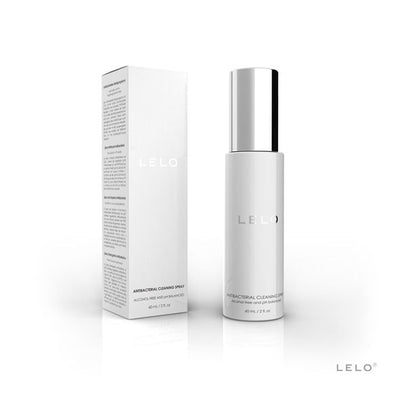
Warm water and mild soap are enough for a non-porous surface. A dedicated cleaner is better for electronic toys that cannot be rinsed, and for anything with seams or texture where soap gets trapped. Full detail in our cleaning and care guide.
9. Storing badly
Three habits quietly destroy toys.
Putting them away damp. Residual moisture is the actual problem, not the cleaning. Dry completely first.
Storing them touching each other. Silicones of different grades can react on contact and leave permanent sticky marks. Separate bags, or a divided box.
Leaving them plugged in permanently. Lithium batteries degrade fastest when kept at full charge. Charge, unplug, store.
10. Sharing without a barrier
Sharing a toy is fine. Sharing it unprotected is how infections move between people, including in long-term couples — most sexually transmitted infections are symptomless for long stretches, so « neither of us has anything » is an assumption rather than a fact.
A condom on the toy, changed between people, solves it in one gesture. For porous toys it is the only acceptable option, because those toys cannot be properly sanitised. Our guide to STIs, toys and what actually transmits covers what survives on a surface and what does not.
Two more worth naming
Buying second-hand. It should not need saying, and the listings exist anyway. No material, no cleaning method and no seller's assurance makes this acceptable.
Pushing through pain. Pain is not something to get past. If penetration hurts, that is a symptom with a cause, and it deserves attention rather than a workaround — see our guide to painful sex and what causes it.
Frequently asked questions
How can I tell if a toy is porous?
The material should be stated. If it is not, two clues: porous toys are usually very soft, slightly tacky to the touch, and carry a faint plastic smell. Medical-grade silicone is matte, odourless and does not cling. When in doubt, treat it as porous.
Can sex toys go in the dishwasher?
Pure silicone, glass and steel with no electronics generally survive it, no detergent, top rack. Anything with a motor, a battery or a seam should not go anywhere near it.
Which lubricant is safe with everything?
Water-based. It works with every toy material and every condom. Silicone lubricant lasts longer but damages silicone toys; oil destroys latex.
Is it really dangerous to use a toy without a flared base anally?
Yes, and this is not scaremongering. Retrieval usually requires a hospital. Flared base or retrieval cord, every time, no exceptions.
How often should a porous toy be replaced?
There is no official lifespan. Replace it once the surface turns sticky, dulls, changes texture, or holds a smell after cleaning. Those are signs the material is breaking down.
Do I need to clean a toy I only use alone?
Yes — before and after. A personal toy will not give you a new infection, but residue, moisture and material degradation are reasons enough.
In short
Check the material before you buy. Use water-based lubricant. Never use anything anally without a flared base. Clean before as well as after, and dry completely before storing.
Five habits, and they remove almost every problem on this list.
Our clitoral stimulators, anal plugs and lubricants and intimate care are selected with these constraints in mind.