The benefits of pleasure on mental health (studies & advice)
The benefits of pleasure on mental health (studies & advice)
What if pleasure wasn't just a "bonus", but a true pillar of your mental health ?
We often talk about libido, orgasms, desire… but much less about how
whose experiences influence mood, stress, anxiety or even feeling
of daily well-being. If you're also going through a period of low libido , you can
complement this reading with our article dedicated to the variations of desire .
A major review published in 2024 shows that better health indicators
sexual activity is regularly associated with:
- fewer depressive and anxious symptoms,
- a better standard of living and overall well-being.
In other words: when sexuality is experienced in a positive, consensual and aligned way with
Her values often go hand in hand with better mental health . WHO Review
2024 on sexual health & well-being – Vasconcelos et al., 2024 – Sexual health & well-
In this article, you will discover what studies say about the benefits of pleasure.
(alone or in pairs) on mental health, but also the important nuances
(compulsions, guilt, trauma). And above all, you'll find concrete solutions for
Make pleasure a gentle resource, not just another pressure. If the shame surrounding
Masturbation takes up too much space; you can also read our article on

1. What exactly is this "pleasure" we are talking about?
When we talk about the benefits of pleasure on mental health, we are not just talking about "having more sex" or "accumulating orgasms".
We're talking more about:
- Solo pleasure : masturbation, self-eroticism, exploration of one's body (possibly with a vulva sex toy or a penis sex toy ).
- Pleasure for two (or more) : shared sexuality, but also cuddles, caresses, affectionate touch – which you can enrich with sex toys for couples .
- Sensual pleasure : skin-to-skin contact, massage, kisses, atmosphere, without necessarily going as far as sexual intercourse. If this appeals to you, you can also find inspiration in our article on slow intimacy .
What seems to matter in studies is not "performance", but the combination of three elements:
- clear consent ;
- an overall positive feeling (pleasure, relaxation, connection);
- a sexuality experienced as aligned with one's values , and not as imposed or guilt-inducing.
2. What the studies say: sexual pleasure & mental health
A 2024 review of numerous studies concludes that positive indicators of sexual health (desire, satisfaction, absence of pain, consensual relationships) are mostly associated with:
- less depression
- less anxiety,
- improved psychological and social well-being. Vasconcelos et al., 2024 – Associations between sexual health & well-being – WHO Review 2024
Other studies show that sexual satisfaction is linked to:
- fewer depressive and anxious symptoms,
- a better sense of quality of life,
- Greater couple satisfaction. Carcedo et al., 2020 – Sexual satisfaction & depression – Brody, 2009 – Sexual satisfaction & mental health
Note: This research shows correlations . We can't say, "If you have more orgasms, you'll never experience depression." But it does suggest that sexual pleasure, when experienced positively, is often part of a set of factors that support mental health. To understand how this pleasure relates to your long-term desire, you can also read our article on fluctuating libido .
3. The tangible benefits of pleasure on the brain & mood
3.1. Reduction of stress and anxiety (at least in the short term)
During sexual pleasure and orgasm, the body releases a cocktail of "feel-good" hormones : dopamine, endorphins, and oxytocin. These molecules are known to:
- reduce the perception of stress and pain,
- to soothe the nervous system,
- to improve mood.
Review articles aimed at the general public, based on studies, regularly describe these effects: a decrease in cortisol (the stress hormone), muscle relaxation, and a feeling of release after sex or masturbation. (Verywell Mind – Psychological benefits of an orgasm – Verywell Health – Benefits of sex – WebMD – Sex & Health)
3.2. Mood improvement & prevention of depression
Some studies suggest that people with a satisfying sex life report fewer depressive symptoms . (Carcedo et al., 2020) Other studies suggest that regular sexual activity may be associated with a lower risk of depression , particularly in young adults—although the relationship can also work the other way around (people who are less depressed have more energy for an active sex life). (Verywell Health – sex & mental health)
3.3. Better sleep (and therefore better emotional regulation)
After an orgasm, many people describe a feeling of drowsiness and relaxation . Review articles and some studies report that sex—especially with orgasm—can improve sleep quality, which has a ripple effect on mood, concentration, and stress resistance. Verywell Mind – orgasms & sleep – Verywell Health – sex & sleep
3.4. Social connection & sense of belonging
Shared sexual pleasure and simple affectionate touch (hugs, caresses, holding hands) are linked to the release of oxytocin, sometimes called the "bonding hormone." Real-life studies have shown that moments of affectionate touch are associated with:
- more happiness in everyday life.
- higher levels of oxytocin,
- Lower cortisol levels. Schneider et al., 2023 – Affectionate touch & oxytocin – Schneider et al., 2025 – Touch & stress buffering
This feeling of secure connection is a powerful protective factor for mental health. For daily inspiration, you can find ideas in our guide on caressing or in our guide to slow intimacy .
4. Masturbation & mental health: what the research suggests
Masturbation remains a subject fraught with taboos and myths. Yet, numerous studies describe it as a frequent, normal, and often beneficial practice when experienced without guilt or compulsion.
4.1. Stress relief & emotional regulation
Summaries intended for the general public, based on studies, report that masturbation can:
- reduce stress and tension,
- to improve mood through the release of endorphins and oxytocin,
- Temporarily relieve anxiety. Healthline – Masturbation & brain – Medical News Today – Masturbation and mental health
More specific studies suggest that, for some people, masturbation is used as a coping strategy to reduce negative emotions (anxiety, sadness) – with rather positive effects when the practice remains moderate and non-guilt-inducing. Wehrli et al., 2024 – Masturbation as coping – Eskandar et al., 2025 – Masturbation & mental well-being
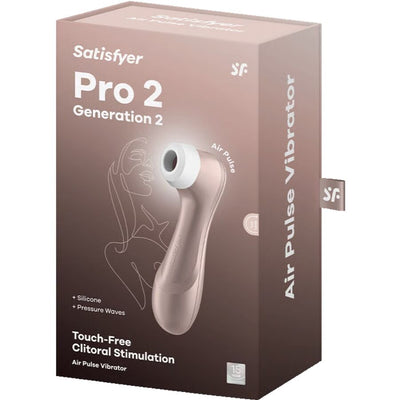
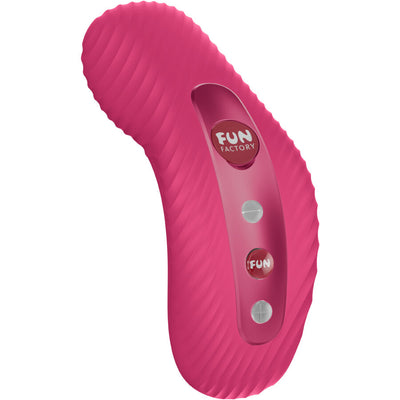
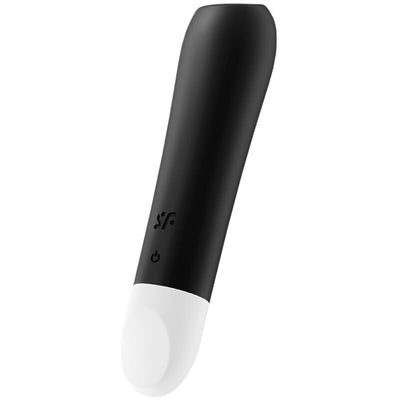
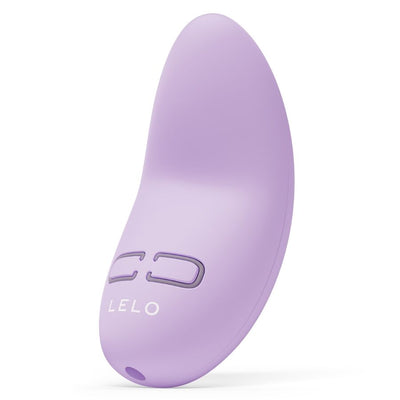
If you want to specifically address the shame surrounding self-pleasure, you'll find detailed guidance in our article on masturbation and shame . And to explore your body gently, you can also discover our vibrators , clitoral stimulators , or male masturbators .
4.2. But beware of compulsions and guilt
The same sources point out that things get complicated when:
- Masturbation becomes compulsive (to the point of interfering with work, sleep, and relationships).
- She is surrounded by a strong feeling of shame or guilt .
Case studies and research on compulsive sexual behaviors show that this type of behavior can be associated with more depressive and anxious symptoms. Case study – masturbatory guilt & depression – Shivakumar et al., 2024 – Obsessive sexual behavior – Medical News Today – compulsive masturbation
The issue is therefore not "masturbation yes or no?", but rather: how you experience it, and whether it supports your life or complicates it.

5. Shared pleasure, touch & mental health
The benefits don't just come from orgasm. Simply being gently touched by a trusted person has measurable effects on stress and well-being.
5.1. The Power of Affectionate Touch
Recent studies show that people who receive more affectionate touch on a daily basis (hugs, holding hands, caresses) exhibit, on average:
- greater subjective well-being,
- less stress (decreased cortisol),
- more circulating oxytocin. Schneider et al., 2023 – Affectionate touch & oxytocin – Schneider et al., 2025 – Touch, stress & well-being – Review article – Touch & mental wellness
If you want to nurture this aspect in your relationship, you can refer to our article on touch and sensuality , or create a ritual around a couples' gift set (massage oil, candle, sensory accessories...).
5.2. Positive sexuality & couple satisfaction
Longitudinal studies suggest that sexual satisfaction and relationship satisfaction mutually influence each other: when sexuality is more fulfilling, the relationship strengthens… and vice versa. Zhang et al., 2019 – Partnered sex & mental health – Stenlund et al., 2024 – Healthy lifestyle & future sexual satisfaction – Andreoli et al., 2024 – Positive sexuality & health
Positive sexuality isn't necessarily about more sex, but about a space where you feel:
- respected,
- listened to,
- free to say yes… and no.
To nurture this connection, you can also explore our intimate questions or our suggestions for talking about fantasies as a couple .
6. When pleasure can complicate mental health
To be honest, we also need to look at situations where sexual pleasure does not support mental health – or even destroys it.
6.1. Pleasure under pressure or without consent
Forced sex, practiced to "avoid conflict," to "please" by coercion, or in a context of manipulation, is not a tool for well-being. On the contrary, it can reinforce anxiety, shame, or post-traumatic symptoms.
6.2. Compulsive sexual behaviors
When sex (or masturbation, or pornography) becomes an uncontrollable behavior , used systematically to escape painful emotions, and begins to:
- take up a large part of the time,
- disrupting sleep, work, or relationships,
- to cause shame, isolation, sadness…
…this is sometimes referred to as compulsive sexual behavior . Recent studies show that this type of behavior is associated with higher rates of depression, anxiety, and psychological distress. Shivakumar et al., 2024 – Obsessive sexual behavior
In these cases, the priority is not "more pleasure", but regaining choice and control , often with the help of a professional.
6.3. Guilt, taboos, cultural pressure
The same gesture can be calming for one person, and generate a lot of anxiety for another, depending on:
- the education received,
- the place of religion,
- messages about the body, masturbation, pleasure,
- the experience of violence or betrayal.
It's not "all in your head" in the sense of "it's made up": these situations leave a real psychological imprint, which can be helpful to explore in therapy if you wish. If you recognize yourself experiencing intense guilt after masturbation, the article "Masturbation: How to Overcome Shame and Flourish" may help you gain clarity.
7. How to make fun a resource for your mental health
Here are some concrete suggestions to ensure that pleasure becomes a support , and not an additional source of anxiety.
7.1. Replace performance with curiosity
Instead of "I need to enjoy myself" or "I need to perform well," try questions like:
- What would make me feel good right now?
- Do I crave sensuality, cuddles, masturbation, or nothing at all?
- What does my body need (to slow down, to be held, to move, to breathe)?
You can also treat yourself to slower, more qualitative experiences, drawing inspiration from slow intimacy or our ideas for pleasure without penetration .
7.2. Integrating pleasure into an overall healthy lifestyle
Studies show that factors that support sexual health (sleep, physical activity, lower stress, diet, relationship quality) also support mental health . Almuqahwi et al., 2023 – Physical activity & sexual function – Stenlund et al., 2024
7.3. Practice some erotic mindfulness
Sexual mindfulness involves gently bringing attention back to sensations (warmth, pressure, breath) instead of letting it revolve around performance or intrusive thoughts. Clinical trials show that these approaches can decrease distress related to desire or arousal and improve sexual and emotional satisfaction. Krieger et al., 2023 – Mindfulness & sex therapy – Brotto et al., 2021 – Mindfulness & desire
In practical terms, you can, for example, transform a massage for two into a real moment of attention to sensations, with a massage oil or candle chosen from our couples' sets or with a suitable lubricant .
7.4. Talk (a little) about this subject with someone you trust
Sharing what you're feeling (with a partner, a friend, a therapist) can help alleviate shame, loneliness, or the feeling of "not being normal." You don't have to reveal everything all at once, but you have the right to no longer carry this burden alone .
7.5. Knowing when to ask for help
It's time to consult if:
- Your sexual practices more often leave you feeling drained, ashamed, or in tears than at peace.
- You feel like you're losing control over your porn consumption or masturbation.
- You have experienced violence and sex triggers flashbacks or very strong anxieties,
- You feel so deeply depressed or anxious that the question of pleasure becomes secondary because you feel so bad.
In these cases, a sexologist, psychologist or doctor trained in sexual health can help you disentangle what relates to the body, history, beliefs, and context.

Conclusion: pleasure as an ally, not as an obligation
Pleasure is not a magic wand that cures all psychological suffering. But data is accumulating to show that positive, consensual and aligned sexuality is often part of a set of factors that protect mental health: less stress, more connection, more well-being.
You don't have to force yourself to "have more sex" to be mentally healthy. However, you can:
- Claim your right to pleasure, even if simple and imperfect.
- Let pleasure become a space of gentleness, not performance.
- Ask for help when this area is causing you more pain than good.
Your body isn't just for coping. It also has the right to feel alive, at peace, and sometimes joyfully filled with pleasure. And if you want to turn these ideas into concrete experiences, you can explore our sex toys , lubricants , or couples' kits , designed to nurture both pleasure and connection.
FAQ: Pleasure, sexuality & mental health
Can sex or masturbation really improve mental health?
They do not replace treatment or psychotherapy when depression or anxiety disorders are present. However, studies show that sexual satisfaction , affectionate touch, and a positive sexual experience are associated with less depression and anxiety, and better overall well-being. Vasconcelos et al., 2024 – Carcedo et al., 2020
Masturbating more = being less depressed?
It's not that simple. Some people use masturbation as a tool for emotional regulation (to reduce stress and anxiety) and actually derive well-being from it, as long as it remains a choice and not a source of guilt. (Healthline – Masturbation & mood – Wehrli et al., 2024) But when the practice becomes compulsive or heavily fraught with shame, it can actually worsen distress. If this topic resonates with you, the article "Masturbation: How to Overcome Shame and Flourish" will provide more detailed guidance.
How much sex does it take for it to be "good for mental health"?
There's no magic number. Some studies suggest that regular sexual activity, experienced as positive and consensual, is associated with greater well-being, but this varies greatly from person to person. Verywell Health – frequency & mental health. The important thing isn't the frequency, but the quality of the experience and respecting your boundaries.
What if I don't really feel like having sex right now?
This isn't a moral failing. Libido fluctuates with stress, fatigue, hormones, mental health, relationship quality… A prolonged decrease in desire can be a signal (like loss of appetite or sleep) that something is happening in your life or health. You can work on the context (rest, stress, connection, therapy) without forcing yourself to have sex to "feel better." To better understand these fluctuations, you can read our article on decreased libido .
Can pleasure worsen my mental health?
Pleasure in itself, no. But certain contexts can be toxic:
- non-consensual sex or sex practiced under pressure
- compulsive behaviors that take up all the space,
- sexual sphere linked to untreated trauma
- strong religious or moral guilt surrounding the body and pleasure.
In these cases, it is not pleasure as a sensation that is problematic, but the context in which it occurs. Here, having support can truly make a difference. Shivakumar et al., 2024
How do I know if I need to talk to a professional?
You can check if:
- You feel that your sexuality is primarily a source of suffering rather than pleasure.
- You feel trapped in behaviors that you can no longer control,
- You feel a lot of shame or disgust surrounding your body or your desires,
- You have symptoms of depression or anxiety that persist (sadness, anxiety, loss of interest, sleep disturbances…).
Talking about sexuality with a professional can be intimidating, but for many people, it is a real relief to finally be able to broach the subject without being judged.
Sources and resources for further exploration
To explore the links between pleasure, sexuality, and mental health further, here are some resources (mostly in English):
-
Sexuality, mental health & well-being
Vasconcelos et al., 2024 – Associations between sexual health and well-being
WHO Review 2024 – Sexual health and well-being
Carcedo et al., 2020 – Sexual satisfaction and depression
Brody, 2009 – Satisfaction with sex life and mental health -
Masturbation, coping & mental health
Medical News Today – Masturbation and depression
Healthline – Masturbation effects on the brain
Wehrli et al., 2024 – Masturbation as coping strategy
Eskandar et al., 2025 – Masturbation and mental well-being
Case report – Masturbatory guilt and severe depression -
Touch, oxytocin & well-being
Schneider et al., 2023 – Affectionate touch, oxytocin & happiness
Schneider et al., 2025 – Touch experiences and psychological well-being
Article – Physical touch and mental wellness -
Mindfulness, sexuality & therapy
Krieger et al., 2023 – Mindfulness in sex therapy and intimate relationships
Brotto et al., 2021 – Mindfulness-based sex therapy for low desire
Jarvis et al., 2025 – Sexual mindfulness and daily sexual function -
Popular science articles on pleasure & mental health
Verywell Mind – Psychological benefits of an orgasm
Verywell Health – Benefits of sex for physical and mental health
Psychology Today – How sexual pleasure benefits brain and body
WebMD – Sex and health
These resources will allow you to explore in more detail how pleasure, sexuality and mental health intersect – and perhaps find new ways to take care of yourself, whether through reading, conversations, or concrete experiences with our sex toys , lubricants and couples kits .