Female pleasure: a complete guide to the zones of sensation
Female pleasure: a complete guide to the zones of sensation
People have been talking to you about "female pleasure" for a long time, but has anyone ever...
Have you really explained where and how your body likes to be touched? Perhaps you enjoy it?
especially through clitoral stimulation, if penetration alone isn't enough for you, or that
Some areas seem "dead" while others light up at the slightest touch.
a light touch.
You're not the only one asking questions. Surveys show that 10 to 15%
Some women have never had an orgasm , and up to half are not
satisfied with the frequency of their orgasms. Source: MedlinePlus, Orgasmic
A more recent survey ("Normal Sex Survey 2025") also points out that only
Approximately 43% of women and non-binary people regularly experience orgasm
during intercourse, compared to 80% of men – while more than 90% of
Respondents state that direct clitoral stimulation is what works
really for them. See the Normal Sex Survey 2025
This guide is here to help you map your sensitive areas : genital,
extragenital, sensory, and mental. Not to impose a "right way" on you.
to enjoy, but so that you can better understand your own body – and
You can possibly guide a partner with more gentleness and confidence.
Read it in conjunction with our article on pleasure without penetration or our guide
regarding low libido if you have questions about your desire.

1. Female pleasure: some truths to establish from the outset
Before going into the details of the body, a few important points:
- Every body is unique : this guide offers suggestions, not a mandatory instruction manual.
- Most women and people with vulvas do not reach orgasm with penetration alone : clitoral stimulation is often central (we discuss this in detail in our guide on myths about female pleasure ).
- Pleasure depends as much on the brain (security, imagination, emotions) as on nerve endings.
- Feeling nothing or very little in certain areas does not make you a "failure": it is information, not a verdict.
We'll therefore move from the classic erogenous zones (vulva, clitoris) to often-overlooked areas (neck, back, hands…), without forgetting the greatest erogenous zone of all: your nervous system and your imagination. If you're reading this article with a partner, you can also find inspiration in our couple's rituals to rekindle desire .
2. Vulva and clitoris: the anatomical heart of pleasure
The vulva is everything you see externally: labia majora, labia minora, clitoral hood, glans of the clitoris, vaginal opening, vestibule… Medical resources remind us that the entire vulva is an erogenous zone , with the clitoris as its ultra-sensitive center. See the Cleveland Clinic's clitoris fact sheet.
The clitoris: much more than a "button"
The clitoris is a complex organ, of which only a small part is visible. Anatomical images show:
- the glans (the small "pearl" visible under the hood),
- the body of the clitoris which extends inwards,
- the raw (two "legs" of erectile tissue that run along the pubic bone),
- the vestibular bulbs that surround the vaginal opening.
A recent study estimates that the clitoris is innervated by an average of 10,281 nerve fibers , even more than the often-cited figure of 8,000. OHSU – more than 10,000 nerve fibers – Medical News Today – clitoris & innervation
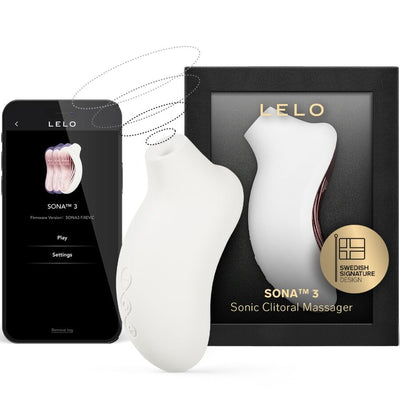
In short: it's an organ dedicated to pleasure . That's also why accessories like clitoral sex toys or vulva vibrators can be real allies when you want to explore this area at your own pace.
Areas to explore on the vulva
- Clitoral hood and sides : often more comfortable at first than the glans itself.
- Area around the urethra : rich in sensations, sometimes linked to the urge to "pee" during pleasure.
- Labia minora : highly innervated, appreciate caresses, gentle pinching, light vibrations.
- Vaginal entrance : circle of very sensitive tissue, especially to slow caresses and progressive pressure.
You might notice that some areas love pressure, while others prefer light touches. The important thing is to start gently , let your body respond, and adjust accordingly. If you'd like to use tools, lubricants and clitoral stimulators can make these explorations more comfortable and varied.
3. Internal areas: vagina, paraurethral area, cervix
Inside, the sensations are more diffuse , deeper, sometimes more emotional. This is often where G-spot stimulation toys or slow penetration, discussed in our article on slow intimacy, come into play.
The vagina
The vagina is a muscular-mucosal canal that can be very sensitive… or quite neutral, depending on the person and the area. Many describe:
- a higher sensitivity in the outer third (near the entrance),
- sensations of fullness, stretching, internal massage rather than "tickling" like on the clitoris.
There's no right way to feel. If you mainly feel through external stimulation, you're within the normal range.
The famous "G-zone"
The famous "G-spot" is often described as a spongy area on the anterior vaginal wall (the one facing the pubic bone), a few centimeters from the entrance. Some studies suggest that these sensations could be related to the tissue around the urethra and the internal structures of the clitoris.
You can explore it alone or with a partner, using well-lubricated fingers or a suitable sex toy, with a "come here" type motion. Important:
- For some, it's very pleasant .
- For others, it is neutral or unpleasant .
If you don't feel anything in particular, you're not "failing." It just means your body has other preferences . If you'd like to see what it's like for you, opt for toys specifically designed for this purpose, like those in the G-spot sex toy collection, which are often curved to facilitate contact.
Cervix and deep sensations
The cervix (at the very back of the vagina) is very sensitive. For some people, gentle and well-prepared stimulation can produce very deep sensations, while for others it is frankly painful.
Golden rule: if it hurts, adjust or stop . You should never "endure" penetrating pain under the pretext that "it's normal." And if the pain recurs frequently, don't hesitate to talk to a professional and, in parallel, read resources like our guide on stress and sexuality , because the nervous system also plays a huge role.
4. Little-known erogenous zones: the whole body as a map of pleasure
A study on extragenital erogenous zones showed that over 95% of women identify nongenital areas as clearly erotic, the most frequently cited being the breasts, lips, neck, ears, and buttocks . Approximately 12% even say they can achieve orgasm solely through stimulation of these areas. Study on extragenital erogenous zones
The classics
- Breasts and nipples : rich in nerve endings, sensitive to heat, breath, caresses, and gentle sucking.
- Lips and mouth : slow kisses, tongue, light nibbling… these are powerful arousal boosters.
- Neck and nape : an area often considered a "switch" for many, very reactive to light touches and breaths.
- Ears : contour, lobe, area behind the ear… often underestimated.
Often overlooked but powerful areas
- Lower back and lumbar region : link between support, body posture and sensations.
- Inner thighs : area of anticipation, of erotic tension.
- Buttocks : caresses, pressure, massages, sometimes consensual slaps.
- Stomach, flanks, hips : a very intimate area, often linked to feelings of security.
- Hands, fingers, wrists : holding, caressing, kissing the hand can be surprisingly intimate.
- Feet (for some): massages, pressure, heat.
Popular articles on sexual health remind us that almost any area of the body can become erogenous if it's associated with safety, slowness, and gradual arousal. Healthline – guide to erogenous zones – Medical News Today – erogenous zones. To explore these areas together, you can also find inspiration in couples' gift sets or sensual massage oils, if you use them.

5. The brain: the largest sensory center
It's often said, but it's not a metaphor: without your nervous system , no erogenous zone would function. What also fuels your pleasure are:
- your thoughts (fantasies, memories, projections),
- your emotions (security, confidence, excitement, shared vulnerability),
- the context (atmosphere, available time, absence of pressure).
Studies like those of Rosemary Basson emphasize that, for many women, desire is often reactive : it appears after pleasurable stimulation and connection have begun, and not necessarily "in advance." Basson – model of the female sexual response
That's why slowing down, foreplay, atmosphere, and a sense of security so dramatically transform sensations: they prepare your nervous system to receive. If you feel like you easily "disconnect," our articles on stress and sexuality and on the benefits of pleasure for mental health can help you gently reconnect.
6. How to practically explore your sensory zones (alone)
You don't need to "know everything" right away. Instead, you can start exploring gradually , with or without accessories. And if you'd like, you can slowly introduce sex toys for women to see how it makes a difference.
A small ritual is possible
- Create a safe environment : closed door, phone on silent, soft lighting, blanket or bathrobe in which you feel comfortable.
- Breathe for a few minutes : inhale through your nose, exhale through your mouth, feel your stomach relax.
- Scan your body : from the top of your head to your feet, mentally note the areas that are already alive, those that seem neutral.
- Explore without the goal of orgasm : touch different areas (neck, breasts, stomach, thighs, vulva…) with varying pressures and rhythms. You can use a lubricant or a clitoral vibrator if you have one.
- Note down what you like : afterwards, you can write down some keywords (areas, type of touch, intensity) to remember it.
The idea isn't to "perform," but to give you the opportunity to learn your own body language. If masturbation raises many questions or feelings of shame for you, you can also take a look at our article "Masturbation: How to Overcome Shame and Flourish."
7. Share your pleasure zones with a partner
Once you've mapped your body a little (or even while doing so), you can share some of your discoveries. This is exactly the kind of approach that fuels the rituals discussed in "Couple: 10 Intimate Rituals to Rekindle Desire" .
A simple game: the body map
- Draw or imagine a body (yours, his, both).
- Colour code: green = I love it / I want to explore; orange = I am curious but in small doses; red = no, not for now.
- Start from the green zones to have fun, while keeping the option to readjust at any time.
Phrases that facilitate feedback
- "That's good, but a little slower."
- "I like it when you stay in the same place for a long time."
- "That area doesn't really appeal to me, let's try here instead."
You have the right to change your mind , to try something and then decide it's not for you after all. That's part of the fun. And if you'd like to introduce some accessories into this game, the couples' sex toy collection and the sets for two can be a good starting point.
8. When sensations are weak… or painful
If you feel like you "don't feel much," or conversely, that you mostly experience pain, know that you're not alone. It's estimated that 18 to 40% of women experience difficulty reaching orgasm or sexual response disorders at some point in their lives. Study on orgasmic difficulties
In this case, it may be useful to check:
- the possible presence of pain (yeast infection, vaginismus, vestibulodynia, endometriosis, etc.),
- the context (intense stress, chronic fatigue, mental workload, medication),
- personal history (trauma, shame, very guilt-inducing upbringing).
A healthcare professional (doctor, gynecologist, midwife, sexologist, therapist) can help you untangle what's physical, psychological, and relational . You don't have to go through this alone. While waiting for an appointment, the suggestions in our article on low libido and our article on stress and sexuality can help you take care of your overall well-being (sleep, stress, mental load, etc.). 
Conclusion: your body deserves to be listened to, not judged
This guide will never tell you "you should feel this here." Your body isn't a textbook. It's a living territory, with its highly reactive areas, its more neutral regions, its no man's land, and its places just waiting to be gently tamed.
What you can choose, however:
- give yourself time to explore,
- To be more curious than judgmental towards your reactions,
- Share your discoveries, if you wish, with partners who respect you.
Your pleasure doesn't need to resemble someone else's to be legitimate. It simply needs to be heard—first by you, and then, perhaps, by those with whom you choose to share it. And if you'd like to put theory into practice, you can explore our sex toys for women , our clitoral stimulators , or our selection of sex toys for couples to co-create your own language of pleasure.
FAQ: Female pleasure and erogenous zones
Is it normal not to experience orgasm from penetration alone?
Yes, absolutely. The majority of women and people with vulvas don't reach orgasm through penetration alone. Studies show that clitoral stimulation (external or via internal structures) is what works best for the vast majority. You're not "failing," it's just the typical movie scenario that's unrealistic. If you'd like to explore other ways to experience pleasure, you can read our article on pleasure without penetration and, if you wish, discover clitoral sex toys that focus stimulation where it works best for you.
I can barely feel anything in my vagina, is that serious?
Not necessarily. Many people experience pleasure primarily externally (vulva, clitoris, surrounding areas) and describe internal sensations as more diffuse. If you truly feel nothing, or if you experience pain, it's worth talking to a doctor or sex therapist to ensure everything is okay physically and emotionally. In the meantime, you can experiment with external stimulation (with fingers, a clitoral stimulator , or lubricant ) without putting pressure on yourself to have penetration.
Is it possible to have an orgasm without touching the genitals?
Yes, some people report being able to achieve orgasm solely through stimulation of extragenital areas (breasts, neck, ears, etc.). One study found that approximately 12% of women surveyed reported orgasms from these areas alone. It's not the norm, but it's possible. And even without orgasm, these areas can greatly enhance pleasure. The key is to feel safe and comfortable in this context (you can find inspiration in our ideas on intimate couple rituals ).
How can I know if an area is truly "erogenous" for me?
You'll only know by exploring it. Start with very gentle touches, observe: is it pleasant, neutral, or unpleasant? If it's neutral, you can try variations (pressure, rhythm, temperature). If it's unpleasant or painful, respect your limits. A zone doesn't need to be "erogenous" for someone else to deserve respect in your home. If you like, you can regularly repeat this "scan" on your own, perhaps with a soft sex toy to vary the stimulation.
How long does it take to "know" your body well?
There's no set timeframe. The body changes with age, hormones, experiences, fatigue, trauma, healing… What you enjoy at 20 won't necessarily be what you enjoy at 40 – and that's okay. Think of it as a continuous learning process rather than a test to pass once and for all. Your rituals can evolve over time, like those suggested in slow intimacy or stress-relief rituals .
Do I absolutely have to aim for orgasm every time?
No. Orgasm is an intense and precious moment, but pleasure isn't limited to that. You have the right to experience sensual moments that are "incomplete" in terms of climax, but very complete in terms of connection, relaxation, and tenderness. The important thing is that you don't force yourself, that you stay attuned to your body and your desires. Approaches focused on slowness and connection , or on pleasure without penetration , can greatly help in moving beyond the "all or nothing" mindset.
When is it best to consult a professional?
This is a good idea if:
- You have persistent pain (penetration, touch, tampons, gynecological examinations),
- You feel very disconnected from your body, with a lot of shame or blockages,
- You feel that your difficulties in experiencing pleasure are causing real suffering (personal or within your relationship),
- You have experienced trauma or sexual violence that makes sexuality complicated today.
A doctor, sexologist, psychologist, or therapist trained in these areas can help you progress at your own pace, without judgment. In the meantime, you can treat yourself to small, practical things (a suitable sex toy , comfortable lubricants , a few stress-relieving rituals ) to help your body reconnect sexuality with safety.
Sources and resources for further exploration
To delve deeper into the anatomy of female pleasure, erogenous zones, and sexual response, here are some reliable resources (mostly in English):
-
Anatomy of the vulva and clitoris
Nguyen et al., 2023 – Female External Genitalia (NCBI Bookshelf)
Cleveland Clinic – Clitoris: Anatomy, Location, Purpose
Kenhub – Clitoris anatomy -
Innervation and sensitivity of the clitoris
OHSU, 2022 – The clitoris has more than 10,000 nerve fibers
Uloko et al., 2023 – How many nerve fibers innervate the human glans clitoris? -
Erogenous zones and touch mapping
Turnbull et al., 2014 – Reports of intimate touch: erogenous zones…
Maister et al., 2020 – The Erogenous Mirror
Healthline – A guide to erogenous zones
Medical News Today – Erogenous zones -
Orgasmic gap and difficulties in pleasure
MedlinePlus – Orgasmic dysfunction in women
by Sutter et al., 2014 – Who are the orgasmic women?
Normal Sex Survey 2025 – Orgasm gap & clitoral stimulation
Wikipedia – Orgasm gap (summary) -
Models of the female sexual response
Basson, 2000 – The female sexual response: a different model
Wikipedia – Human sexual response cycle (Masters & Johnson, Kaplan, Basson)
These resources complement this guide with scientific data, anatomical diagrams, and more technical explanations of how female pleasure works—helping you understand your body with even greater clarity and gentleness. And if you'd like to put this knowledge into practice, you can explore our collections of sex toys for women , clitoral stimulation , G-spot stimulation , as well as sex toys for couples and lubricants to tailor each experience to your body.