Female orgasm: 7 powerful techniques to intensify your sensations
Sensual Prestige Guide · Female orgasm & intensity of sensations
Female orgasm: 7 powerful (and scientifically backed) techniques to intensify your sensations
Female pleasure is a rich, complex, and profoundly fascinating universe. Perhaps
that you too sometimes feel that your orgasms could be more
intense, longer, more enveloping.
The truth is that pleasure isn't a matter of luck: it depends on a mixture
A subtle interplay between body, mind, emotions, and self-knowledge. With the right
Techniques, your sensations can change enormously.
Here are 7 powerful techniques, inspired by research in sexology and neuroscience.
to transform your orgasmic experience and explore your full sensual potential.
In this article, you will discover:
- how to activate secondary erogenous zones to amplify the rise of
pleasure ;
- how to use breathing as a physiological amplifier;
- Why extended foreplay changes the depth of orgasm;
- how your brain can intensify or block sensations;
- more subtle ways to stimulate the clitoris ;
- how sex toys can become true allies;
- Why relaxing the body is the key to an amplified orgasm.

1. Exploring secondary erogenous zones: a still underestimated lever
Studies show that up to 75% of pleasure signals are interpreted through the entire body and not just the genital area . Yet, many people focus almost exclusively on the clitoris.
The Journal of Sexual Medicine also indicates that 85% of women prefer progressive whole-body stimulation before any genital stimulation .
Areas to explore to intensify the sensations:
- The nape of the neck and the hairline
- The shoulder blades and upper back
- The lower back (strongly connected to the pelvis)
- The inner thighs
- The lips and the jaw
- The back of the knees
The more your whole body is awake, the more powerful and profound the final orgasm becomes. You create a wave-like build-up , rather than a single, rapid peak.
2. Breathing: a physiological amplifier of pleasure
Breathing is one of the most underestimated levers of pleasure. Some research suggests that deep breathing increases blood flow to the pelvis by up to 40% , which mechanically increases sensitivity.
Improved oxygenation is also associated with increased orgasmic intensity in approximately 30% of women in some samples.
Staircase breathing technique:
- Inhale for 4 seconds.
- Hold your breath for 2 seconds.
- Exhale slowly for 6 seconds.
You can add a slight contraction of the perineum on the inhalation, then release it on the exhalation to amplify the rise of pleasure and the sensation of warmth in the pelvis.
3. Extended foreplay: essential for a deep orgasm
Foreplay is not just an introduction: it is the foundation of female arousal. According to the Archives of Sexual Behavior , the most intense orgasms often occur after 15 to 20 minutes of varied foreplay .
In addition, approximately 70% of women report reaching orgasm more easily when arousal builds gradually, rather than moving too quickly to intense genital stimulation.
Effective practices for fueling the climb:
- Temperature variations (warm breath, cooler fingers).
- Light touches and pauses, rather than continuous stimulation.
- Caresses on the hips, lower back, flanks.
- Sensory ambiance: music, dimmed lights, perfume or massage oil.
The more slowly erotic tension builds, the more likely the orgasm is to be deep, enveloping, and restorative .
4. Mental focus: your brain is your primary sexual organ
A study from Indiana University reveals that nearly 90% of women experience a drop in arousal due to intrusive thoughts : mental load, insecurities, to-do lists, fear of not "making it"...
Approaches to erotic mindfulness show that they can:
- increase perceived sensitivity by approximately 28%;
- enhance orgasmic intensity in 2 out of 3 women;
- to facilitate letting go during stimulation.
Simple concentration exercise:
During stimulation (alone or with a partner), choose a single element to focus your attention on: heat, pressure, vibration, touch, breath on your skin…
Each time your mind wanders to a thought ("Is it going to happen?", "What do I look like?"), gently bring it back to that point of focus. This micro-discipline of attention can very quickly increase the intensity of what you are feeling.

5. Stimulating the clitoris intelligently: a complex organ, immense potential
The clitoris has over 8,000 nerve endings , roughly twice as many as the glans of the penis. This explains why approximately 70% of women require direct or indirect clitoral stimulation to reach orgasm .
It is also estimated that only 10 to 20% of women can achieve orgasm through penetration alone . For the vast majority, the clitoris must be included in the experience in one way or another.
Effective techniques to explore:
- Slow circles around the clitoris, rather than on the precise spot from the start.
- Gentle and regular pressure , adjusting according to what you like.
- Indirect contact via the lips or clitoral hood to avoid hypersensitivity.
- Gradual variations in rhythm and intensity, rather than abrupt changes.
The idea is not to "find the right universal technique" but to map your own sensitivity : what takes you towards relaxation, what takes you towards the peak, what takes you out of it.
6. Sex toys: scientifically validated allies
The use of sex toys is no longer taboo: it is a very effective tool, confirmed by several research studies on female pleasure.
- 52% of women using an external stimulator report having more intense orgasms.
- 75% report increased intensity with air wave stimulators.
- 60% find it easier to achieve a combined orgasm (internal + external) with a double sex toy.
The most effective models are often:
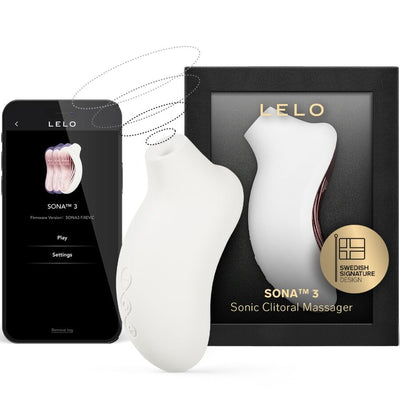
- Air wave stimulators : ideal for non-vibratory clitoral stimulation.
- Premium silicone vibrators : deeper vibration, body-safe materials.
- Wands : perfect for very powerful orgasms or for stimulating multiple areas.
- Dual sex toys (vagina + clitoris) : for more enveloping combined orgasms.
Sex toys don't replace your hand or your partner: they broaden your range of possibilities and help you better understand what really turns you on.
7. Relaxing the body: the key to an enhanced orgasm
Approximately 80% of women involuntarily contract their muscles when aroused: tight thighs, contracted buttocks, rigid stomach… However, these tensions can block or reduce the intensity of orgasm .
Conversely, relaxation techniques are associated with:
- an increase in the duration of orgasm in approximately 66% of women;
- higher intensity thanks to improved blood circulation;
- a diffusion of pleasure throughout the body.
Relaxation tips:
- Consciously relax your thighs, abdominals and glutes during the upward movement.
- Breathe deeply, allowing your belly to expand and contract.
- Adopt open positions (the "butterfly" position, legs slightly open and supported).
- Arch your lower back slightly to open up the pelvic area.
The more your body opens up, the more orgasm can transform into a global wave , and less into a simple localized contraction.

Conclusion: your orgasmic potential is immense
Female pleasure is not a goal to tick off, but a living exploration to be undertaken with curiosity. Research confirms that pleasure depends on a range of factors: breathing, anticipation, type of touch, relaxation, varied stimulation, and connection to oneself and the other.
By applying these 7 techniques, you open the door to longer, richer and more intense orgasms, while respecting your own rhythm.
Your body already knows how to experience pleasure: you're simply learning to listen to its tongue.
FAQ: Female orgasm – frequently asked questions
What exactly is a female orgasm?
A female orgasm is a physiological and emotional response to sufficient sexual stimulation. It often manifests as a gradual build-up of pleasure, followed by an intense peak, muscle contractions in the pelvic area, and a feeling of release. Every woman may experience it differently: for some, it is very localized, while for others it spreads throughout the entire body.
How can I tell if I've already had an orgasm?
Many women ask themselves this question. Generally, an orgasm is characterized by:
- a surge of pleasure that reaches a peak;
- involuntary contractions in the vagina, perineum or lower abdomen;
- a change in breathing, sometimes faster or deeper;
- a feeling of letting go or liberation after the peak.
However, there isn't "one" model of orgasm. If you're unsure, exploring your body and mindful masturbation can help clarify your sensations.
Is it normal not to ejaculate during penetration?
Yes, that's perfectly normal. Only a minority of women reach orgasm through penetration alone. Most need clitoral stimulation, direct or indirect, to experience pleasure. Not having an orgasm during penetration doesn't mean your body is "wrong," nor does it mean your relationship is failing. It's more about better adapting your practices to how you experience pleasure.
What is the difference between a clitoral orgasm and a vaginal orgasm?
We often talk about "clitoral" or "vaginal" orgasms, but in reality, the clitoris remains central to the majority of orgasms. What we call a "vaginal" orgasm often comes from internal stimulation of the clitoral roots and certain internal areas (like the G-spot). So, we can say that these are primarily different areas of stimulation, but the same pleasure system.
Is it possible to have multiple orgasms in a row?
Yes, many women have the potential for multiple orgasms. Some can experience several orgasms in a relatively short period, especially if they remain relaxed and if stimulation continues or resumes after a short break. However, this is neither an obligation nor a "goal" to achieve: what matters is the quality of your sensations, not the number of orgasms.
Why can't I have an orgasm with my partner when I can on my own?
This is a very common situation. When you're alone, you know your moves, your rhythm, your preferences. When you're with someone else, stress, fear of disappointing, the other person's gaze, or a lack of communication can sometimes be added. In this case, it can be very useful to:
- to guide your partner (with your hand, speech, body movement);
- to lengthen the foreplay and vary the stimulation;
- to share what feels good to you during masturbation.
With time and dialogue, most couples manage to find a satisfactory balance.
Can sex toys "damage" my sensitivity or make me dependent?
No, when used correctly and chosen carefully, sex toys don't damage sensitivity. They allow you to explore new sensations and get to know your body better. If you feel like you have trouble reaching orgasm without a sex toy, it's not the end of the world: sometimes all it takes is gradually reducing the intensity or alternating sessions with and without a sex toy to diversify your sources of pleasure.
Can stress prevent orgasm?
Yes. Stress, fatigue, anxiety, or a high mental workload can inhibit desire, lubrication, and letting go. The brain then struggles to "switch into pleasure mode." Hence the importance of creating a reassuring, gentle environment, free from pressure to achieve a specific outcome, and also working on breathing, relaxation, and communication with your partner.
Does age influence female orgasm?
Hormones, the menstrual cycle, pregnancy, menopause, and certain treatments can all change how you experience pleasure. This doesn't mean that pleasure necessarily diminishes with age: for many women, experience, self-confidence, and a better understanding of their bodies more than compensate for these variations and can even lead to more intense orgasms.
When is it useful to consult a sexologist or a healthcare professional?
You might consider seeking help if:
- You've never had an orgasm and it weighs on you;
- You experience pain or discomfort during intercourse;
- You are experiencing a sharp drop in libido that worries you;
- Your sexual difficulties are impacting your self-esteem or your relationship.
A sexologist, gynecologist or therapist trained in sexual health can support you without judgment, with explanations and adapted exercises.
Sources and references
To deepen your understanding of female pleasure, sexual function, and the mechanisms of orgasm, here is a selection of scientific and institutional resources:
-
Journal of Sexual Medicine – scientific articles on female sexual function, the clitoris, arousal, and orgasmic responses.
https://www.jsm.jsexmed.org -
Archives of Sexual Behavior – a leading journal on the psychology of pleasure, sexual practices and foreplay.
https://link.springer.com/journal/10508 -
Kinsey Institute – major research on human sexuality, sexual behavior, and the physiology of pleasure.
https://kinseyinstitute.org -
World Association for Sexual Health (WAS) – reports, recommendations and publications on global sexual health.
https://worldsexualhealth.net -
World Health Organization (WHO) – definition of sexual health, conceptual framework and official publications.
https://www.who.int/health-topics/sexual-health -
Indiana University – Center for Sexual Health Promotion – research on pleasure, sexual mindfulness, and psychosexual responses.
https://cshp.indiana.edu
These sources offer a solid, nuanced and accessible complement to deepen the understanding of female pleasure and orgasmic mechanisms.