Masturbation: How to overcome shame and flourish
Masturbation: How to overcome shame and flourish
You masturbate… and right afterwards, you feel a mixture of pleasure, discomfort, sometimes
Even out of shame? You wonder if you're "normal," if you're doing it too much, not the way he/she does.
It's necessary, or if it means something negative about you.
You are far from alone. Major international surveys show that a large
The majority of adults masturbate at least occasionally, and more and more of
People talk about it openly. Yet, the guilt surrounding the
Masturbation remains very common, especially when one has grown up with messages
moralizing, religious or sexist.
The good news? Science is clear: masturbation is a behavior
Regular, natural, and generally safe sexual intercourse . It can even have some
positive effects on mood, stress, sleep, and self-awareness. Which makes
Suffering isn't so much the act itself as the shame associated with it . And if you
I also want to understand how all of this fits into your overall desire, you can
complement with our article on decreased libido .
In this article, we will look at:
- Why masturbation is far from being an exception,
- Where do shame and guilt come from?
- What studies on masturbation and mental health actually say,
- How to overcome shame, at your own pace, to flourish more in your
pleasure.

1. Masturbation: an extremely common (and increasingly accepted) behavior
We often have the impression of being "the only one" who masturbates the way we do. In reality, the numbers tell a completely different story.
Some key figures
- A large British survey showed that approximately 73% of men and 37% of women had masturbated in the past four weeks. Masturbation Prevalence – British Survey
- A recent study in the United States indicates that nearly 36% of men and 9% of women masturbated at least once a week in the past year. Herbenick et al., 2022
- In France, recent data shows a dramatic increase in female masturbation : approximately 72% of French women report masturbating, compared to 50% in 2006. (Survey "Context of Sexualities in France")
- A large international survey conducted by Tenga (more than 10,000 people in 9 countries) found that approximately 78% of adults , both men and women, reported masturbating. (Tenga Self-Pleasure Report)
In other words: if you masturbate, you're perfectly normal . What's less common, however, is talking about it openly and without discomfort… hence the feeling of being alone with your questions. To help you explore your pleasure without pressure, you can also discover our selection of sex toys for women , sex toys for men , and couples' sets .
2. Where does the shame surrounding masturbation come from?
Shame doesn't fall from the sky. It has a history. Often, it is built at the intersection of several factors.
2.1. Family and cultural messages
Many people grew up with phrases like:
- "Don't touch there, it's dirty."
- "A good girl doesn't do that."
- "You'll become addicted if you continue."
These messages, repeated during childhood or adolescence, sometimes leave a very strong emotional imprint . Even if, rationally, you now know they are myths, the body continues to react with discomfort or guilt.
If these phrases have also damaged your relationship with desire as a couple, the article Slow intimacy: why is this trend so appealing to couples? can help you rebuild a gentler and more conscious sexuality.
2.2. Religion, Morality and Guilt
In some religious or moral contexts, masturbation is presented as a sin, a weakness, or even a serious transgression. Studies show that highly religious people who masturbate may experience more guilt than others, even when their behavior is similar. Winkel, 2020 – Religiosity & Masturbatory Guilt
When the belief that "it's wrong" is deeply ingrained, every action can become an internal battle. This is sometimes referred to as ego-dystonic masturbation : the behavior is at odds with your self-image. Case studies show that this intense guilt can contribute to depressive or anxious symptoms. Albobali & Madi, 2021 – Aneja et al., 2015
2.3. Pornography, comparison, and perfectionism
If your first experiences with eroticism were primarily through porn, you may have internalized highly stylized, codified scenarios, far removed from the real body. As a result:
- you're comparing yourself,
- You judge yourself,
- You might even tell yourself that your way of masturbating is "weird" or "not right".
Shame doesn't come from your body, but from the critical gaze you cast upon it through those filters. To rediscover more playfulness and less pressure, you can also draw inspiration from our ideas for pleasure without penetration , focused on sensations rather than performance.
3. What science (really) says about masturbation
It was long believed that masturbation caused blindness, weakened the body, or "damaged" sexuality. Modern research says the exact opposite.
3.1. A natural behavior, harmless in itself
Major medical journals and health organizations (such as the Cleveland Clinic) consider masturbation a normal and healthy behavior for most people at all ages of adulthood. Cleveland Clinic – Masturbation facts
It doesn't "break" the body, destroy fertility, or cause erectile dysfunction or lack of orgasm. Problems mainly arise when there is:
- compulsion (the feeling of being unable to stop),
- extreme guilt
- used to systematically escape from deep psychological suffering.
3.2. Possible positive effects on the brain and mood
Recent reviews show that masturbation can:
- release endorphins and dopamine (pleasure, reward),
- increase oxytocin (calming, bonding, relaxation),
- to promote better sleep after orgasm,
- Reduce the perception of stress, at least in the moment. Healthline – Masturbation & brain – Medical News Today, 2025 – Queensland Health – health benefits of masturbation
3.3. Link with mental health: the important distinction
A 2024 review on sexuality and well-being concludes that good indicators of sexual health (such as satisfaction, consent, and absence of pain) are generally associated with less depression and anxiety, and a better quality of life. Vasconcelos et al., 2024
In parallel, studies show that when masturbation is accompanied by strong feelings of guilt , the risks of psychological distress increase (depression, anxiety, lasting shame). Medical News Today – Masturbation & depression – Albobali & Madi, 2021 – Eskandar et al., 2025
So it's not masturbation itself that's the problem, but how it fits into your life, your history, and your beliefs. And if you're also going through a period of burnout, the article "Burnout & Sexuality" can help you understand why your body is reacting the way it is.

4. Overcoming the shame associated with masturbation: 5 concrete steps
You don't need to "deconstruct everything" overnight. Overcoming shame is a process , which can be very gentle and gradual.
4.1. Name what you have learned about masturbation
Take a few minutes, with a notebook or on your phone, to answer these questions:
- What was I told (or implied) about masturbation when I was a child/teenager?
- What words were used ("dirty", "sin", "unhealthy", "normal", "everyone does it"...)?
- Whether I like it or not, what messages are still present in my head today?
Simply putting these beliefs outside of yourself (on paper) can sometimes allow you to gain perspective. You can realize that these are inherited phrases, not absolute truths.
4.2. Re-inform yourself with facts
You can then counter these beliefs with a few simple facts:
- The majority of adults masturbate (men and women, in couples as well as single).
- No serious study shows that masturbation destroys health or fertility.
- Reputable medical organizations present it as normal behavior.
You can even create an "antidote" phrase for yourself, for example:
"I masturbate. It's normal human behavior. What I heard before wasn't always accurate or appropriate."
4.3. Learn to speak to you gently
Shame loves harsh phrases: "I'm worthless," "I'm dirty," "I should be ashamed." You can gradually replace them with other forms of self-talk:
- "I've learned to be ashamed, but I can learn something else."
- "My body is not dirty. It reacts like a human body."
- "I can take care of myself, even if I don't do everything perfectly."
4.4. Recreate a safer experience with your body
If every masturbation session is rushed, secretive, and filled with fear of being discovered, your brain associates "self-pleasure = danger." To gently reverse this logic, you can try:
- Choose a time when you actually have some time (not 30 seconds in the bathroom under maximum stress),
- Close the door, put on some soft music, dim the lights.
- Start with non-genital caresses (stomach, chest, thighs, buttocks), just to get you used to feeling again.
You're not necessarily looking for orgasm at all costs. The idea is to relearn how to touch yourself without mentally abusing yourself . If you need inspiration for these caresses, you can refer to our guide on the different types of caresses .
4.5. Give masturbation a meaning that suits you
You might ask yourself:
- "When I masturbate, what am I looking for?" (relaxation, sleep, pleasure, release, escape?)
- "Does this help me or does it complicate my life?"
- "What would masturbation look like that was more aligned with what I want for myself?"
For example, you can decide that your masturbation is:
- a moment of pampering (like a hot shower or a massage),
- a space for exploration (discovering what makes you feel good in order to better communicate it afterwards),
- one relaxation tool among others (and not the only one).
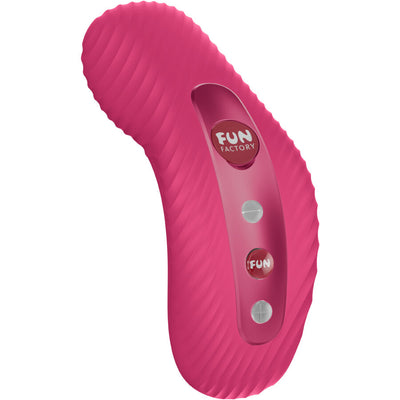
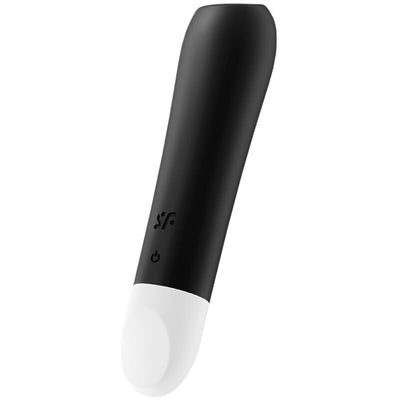
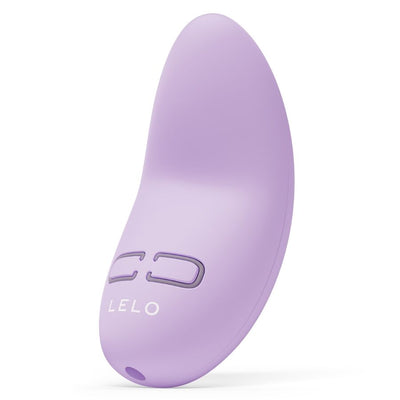
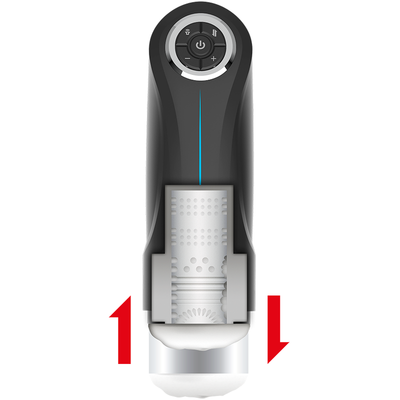
If you wish, you can also incorporate carefully chosen accessories (such as a vibrator , a clitoral stimulator or a penis masturbator ) to explore different sensations, at your own pace.
5. Masturbation & couple: betrayal or resource?
Another major source of shame is the idea that masturbating when you are in a relationship is a form of betrayal, proof that you "no longer love" the other person or that he/she is not enough.
In fact, much research and many surveys show that masturbation is common even among people in stable relationships , and that it can coexist with a satisfying sex life within the couple. Zhang et al., 2025 – Masturbation & Couple Life
Some ideas for discussing it more calmly
- "Masturbating doesn't mean you're not enough for me. It's a different way to explore my pleasure."
- "It helps me get to know my body better, and it can also enrich what we experience together."
- "If you want, we can talk about it... or even explore some moments of mutual self-pleasure."
Every couple has their own "rulebook" on these topics. The important thing is that you can put words to it , rather than remaining alone with the fear of being discovered. To help you, you can refer to the discussion prompts in " Fantasies in a Relationship: How to Talk About Them Without Taboo" or the section on intimate questions to strengthen the connection .
6. When masturbation becomes a refuge that traps
To be honest, there are also situations where masturbation can start to cause pain . For example:
- You masturbate much more than you would like, with the feeling that you no longer really have a choice;
- You spend a lot of time/energy searching for porn or fantasies;
- You feel drained, ashamed, or unwell after almost every session;
- It clearly takes precedence over sleep, work, studies, and relationships;
- You feel that you use it to systematically escape painful emotions (loneliness, anxiety, sadness…).
Some studies refer to this as compulsive sexual behavior . It is not a "lack of willpower" or a "vice," but a pattern that can be linked to other psychological difficulties (anxiety, trauma, depression, etc.). Shivakumar et al., 2024 – Obsessive sexual behaviors
In these cases, the goal is not to stop all pleasure, but to regain choice and to address what hurts deeply, often with the help of a professional.
7. When is it a good idea to have someone accompany you?
You might consider consulting a sexologist, psychologist, or doctor trained in sexual health if:
- The shame surrounding masturbation is very intense and almost permanent;
- you have very harsh thoughts about yourself ("I am dirty", "I am beyond redemption");
- You feel like you're losing control over your masturbation or your porn consumption;
- You have experienced sexual violence, and masturbation reactivates a lot of suffering;
- You are showing signs of depression or anxiety (loss of interest, dark thoughts, panic attacks, isolation…).
Talking about masturbation with a professional can be scary, but it is often experienced as a huge relief to finally be able to discuss this topic without judgment, with someone who is used to it.

Conclusion: you have the right to feel good without hurting yourself
Masturbation is neither mandatory nor forbidden. It's not an exam to pass, nor a sin to atone for. It's simply another way to connect with your body, your desires, and what feels good – when the situation is right.
You have the right:
- to masturbate,
- not to masturbate,
- to change your pace throughout your life,
- to explore, to set limits, to ask questions,
- to ask for help if this topic makes you suffer more than it makes you smile.
Your pleasure doesn't make you a bad person. It makes you human. Shame, on the other hand, doesn't get to decide for you what you have the right to feel.
And if you want to transform this relationship to your pleasure, you can rely on the other resources of the blog (for example on pleasure without penetration or slow intimacy ) and on concrete tools like our sex toys , lubricants or couples' kits to create experiences that suit you.
FAQ: Masturbation, shame & fulfillment
Is it normal to feel ashamed after masturbation?
Yes, unfortunately, it's very common. This shame rarely stems from your body itself, but rather from what you've learned about sex (family, religion, culture, porn, etc.). The good news is that these beliefs can be questioned, nuanced, and transformed. Medical articles highlight that guilt—more than the act itself—is linked to greater psychological distress. Medical News Today – Masturbation & depression
Am I "addicted" if I masturbate often?
Frequency alone is not enough to speak of addiction. The main concern arises when:
- You feel out of control.
- You continue even if it clearly poses a problem for you.
- You feel terrible afterwards, but you can't seem to adjust.
- Your masturbation is taking over the rest of your life (sleep, work, relationships…).
In this case, it's helpful to talk to a professional, not to judge you, but to understand what this behavior is trying to soothe—and to help you find other resources. Shivakumar et al., 2024
Will masturbation "damage" my sex life as a couple?
Not in itself. Many people masturbate and have very fulfilling sex lives with their partners. In some cases, masturbation that is heavily focused on a single type of stimulation (for example, a certain type of porn or a sex toy at maximum power) can make it more difficult to experience the same sensations with a partner. But this isn't irreversible: you can adjust, vary, slow down, and communicate. NTM – effects on the brain & sexuality
To nurture your intimacy as a couple, you can also find inspiration in our intimate questions or try a couples' kit to ritualize your moments of shared pleasure.
Is masturbation bad for mental health?
Current data suggests that, within a healthy context (consensual, chosen, without excessive shame), masturbation can relieve stress , improve mood, and promote better sleep. (Queensland Health – Healthline) It becomes problematic primarily when it is compulsive or accompanied by overwhelming guilt.
What if my religious beliefs tell me that it's wrong?
This is a sensitive point for many people. You can:
- seek information from people within your religious tradition who have a more nuanced approach;
- talk to a therapist who respects your faith, without forcing you to think differently;
- explore what seems ethically right for you, today, as an adult.
The goal is not to "desacralize" you, but to get out of the overwhelming guilt that causes suffering.
How can I talk to my partner about masturbation without making them feel rejected?
You can emphasize that:
- It's a complement, not a replacement;
- It helps you get to know your body better, so you can better tell it what you like;
- You are ready to talk about what would be comfortable for him/her (whether you do it alone, together, whether you talk about it or not…).
Many people are reassured when they understand that masturbation isn't about a lack of love, but about self-care . If discussing these topics is difficult, you can use the suggestions in this article on fantasies in relationships .
Sources and resources to learn more about masturbation and shame
To delve deeper into everything we've just discussed, here are some resources (mainly in English):
-
Prevalence of masturbation
Herbenick et al., 2022 – Masturbation prevalence, frequency & reasons
Gerressu et al. –British National Survey
Tenga – 2019 Self-Pleasure Report
Le Monde – Boom in female masturbation -
Guilt, religion & mental health
Winkel, 2020 – Religiousness & masturbatory guilt
Medical News Today – Masturbation and depression
Albobali & Madi, 2021 – Masturbatory guilt leading to depression
Aneja et al., 2015 – Masturbatory guilt & psychopathology
Eskandar et al., 2025 – Psychological aspects of masturbation -
Masturbation, brain & well-being
Healthline – Effects of masturbation on the brain
Medical News Today, 2025 – Masturbation & brain
Queensland Health – Health benefits of masturbation
Cleveland Clinic – Masturbation: facts & benefits -
Sexuality, mental health & overall well-being
Vasconcelos et al., 2024 – Sexual health & well-being
Carcedo et al., 2020 – Sexual satisfaction & depression -
Compulsive sexual behaviors
Shivakumar et al., 2024 – Obsessive sexual behavior & mental health
You can pick and choose from these resources based on what resonates most with you – the goal isn't to read everything, but to feel better equipped and less alone on this topic. And if you want to turn these reflections into concrete experiences, feel free to explore our sex toys , lubricants , and couples' kits , designed for gentler, more mindful, and more aligned self-pleasure (or pleasure with a partner).